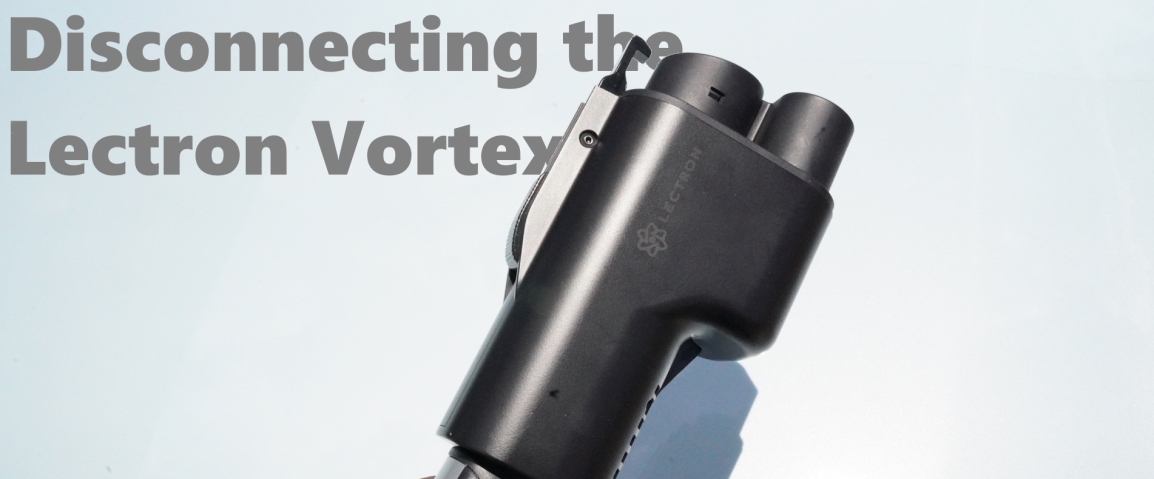
Disconnecting the Lectron Vortex from a Super Charger

If you are reading this, chances are you were searching for information on disconnecting the Lectron Vortex adapter stuck on that Super Charger. I’ll give the answer to that priority.

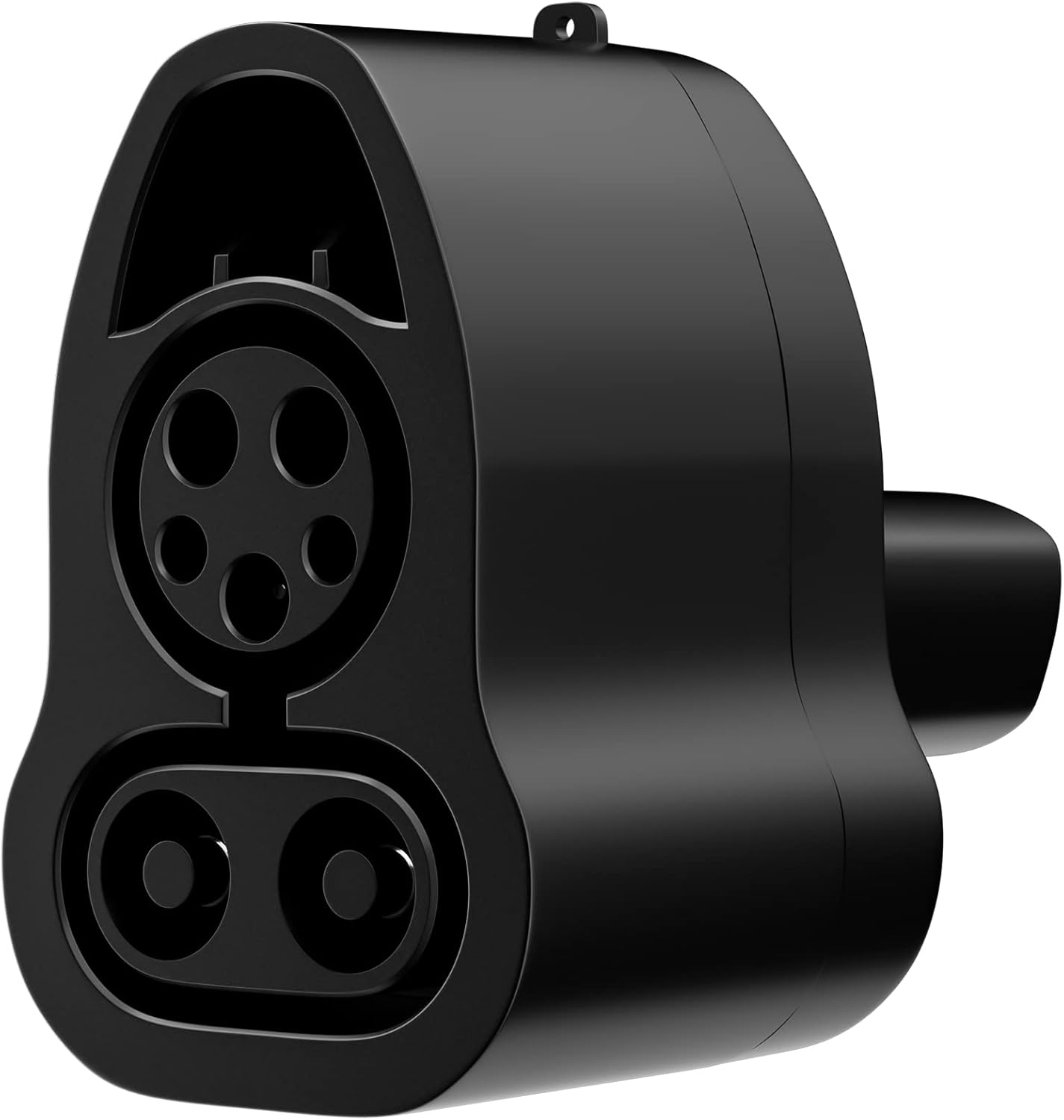
  1. Keep the NACS to CCS adapter connected to your car
  2. Grab onto the NACS cable and apply pressure as though you were pushing it into your car
  3. Squeeze the NACS release cable. This will require significant force. You may have to start squeezing with both hands
  4. Pull or work the cable out. I’ve had to use a bit of a rotation moment to work one out

Step 2 is key. If you don’t push the adapter in a little before pressing the disconnect lever, the adapter can prevent the disconnect lever from going down.

Video on Removing the Lectron Vortex from a NACS

What’s Going On Here

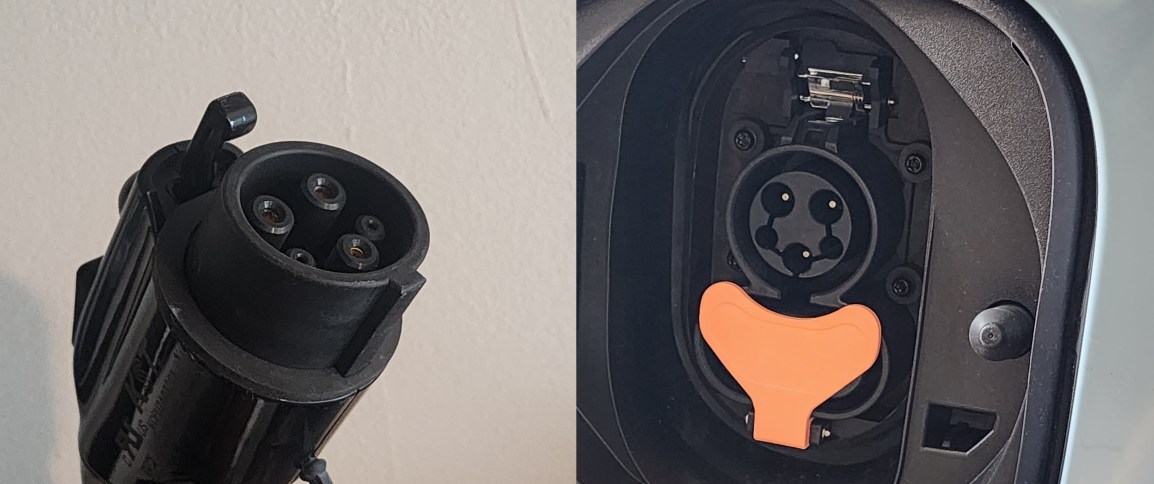
Now that I’ve gotten the information for the people that have found themselves in a desperate situation out of the way, I’ve gor more to say on what’s going on here. Tesla has opened their chargers to a wider variety of cars. The Version 4 super chargers have adapters built in so that they can connect to both Teslas (NACS interface) and non-Teslas (CCS interface). For the Version 3 Super Chargers (which are more widely deployed) there is no built in adapter. A driver can buy an adapter to keep in their car and use as needed. However, compared to the demand, those adapters are in short supply. People that have ordered them from Tesla may see deliver dates that are several months out. This can be a significant disadvantage for those that need to take long trips where charging options may be few. Rather than delay a trip, one might decide to get an adapter for upcoming trips to open up their options. However, note that often times the car manufacturer may prohibit the usage of a third party adapter for DC Fast Charging. Tesla also prohibits the user of third party adapters with their chargers. The key advantage that the third party adapters have over the Tesla adapter is that they are available.

What are the Third Party Options

There are a total of 2 third party adapters available in the USA at the time that I am writing this. Those are the Lectron Vortex and the A2Z Typhoon. Neither is approved by Tesla. Tesla has yet to announce a certification program.

Lectron’s first release of the Vortex had an issue where it was possible to disconnect the NACS without terminating the charging or pressing the release levers. This could have dangerous outcomes! Lectron did a recall and released an updated version of their adapter. In the update, I think they may have overcorrected. In the current version that is available, it is difficult to operate the lever and move it far enough to release the charger. While I’ve seen complaints about the need to remember to engage the lock on the A2P Typhoon. I don’t have experience with the Typhoon myself. I do have a Vortex.

Though I didn’t need a charge, I drove to a local super charger to test how the adapter fits with the car and the Super Charger’s NACS interface. When I was disconnecting, I ran into serious problems in trying to disconnect. It took me about 20 minutes to disconnect the cable. Afterward, I contacted Lectron to complain. They gave me the procedure in the begining of this post. I was hesitant to try it at another Super Charger. I did acquire an adapter with a NACS end to connect to my adapter to try the procedure. It was difficult, but it worked. While watching TV, I casually tried the procedure several more times. Later, I noticed after several inserts and disconnects, that the spring for the lever felt less agressively tight in a good way. It may be the case that with enough insert cycles that the device will settle on a reasonable grip level.

If I Get One of These, Can I Use Tesla Chargers?

Getting an adapter might not be sufficient to use a v3 Super Charger. In addition to having capabilities for interfacing (whether through having a NACS interface built in or having an adapter) the vehicle must also be authorized to use the charger. To date, Tesla has only authorized Rivian and Ford electric vehicles to use Tesla chargers. Other manufacturers have announced that they are partnering with Tesla to make charging evailable to their vehicles. But that is a promise that is yet to take usable form. GM was announced to be the next manufacturer with authorization after Ford. They had announced that they would have availability by the end of Spring 2024. Prior to then, Elon Musk laid off the entire Super Charger team. That likely had an impact on the GM integration and authorization of Super Charging. Some have reported that GM had the adapter listed for purchase for owners of their EVs for 35 USD. This is far less than the 200 to 249 USD price on the ohter adapters. But given that Tesla is behind on delivering the charger adapters to ford EV owners, the timeline for the rollout of other brands is more uncertain.


Mastodon: @j2inet@masto.ai
Instagram: @j2inet
Facebook: @j2inet
YouTube: @j2inet
Telegram: j2inet
Twitter: @j2inet

GM Tesla Charging Delayed

At this point, it is safe to say that GM will not meet its goal of having their cars open to Tesla charging by Spring 2024. The last day of spring astronomically was a few days ago. Q2 ends in a couple of days. In a previous post, I had mentioned that InsideEVs reported the following,

GM’s Supercharger Access Plan Is Still On Schedule, Despite Tesla’s Layoffs

“We plan to stick to the timeline that we previously announced, and that’s kind of all I can say,” Sanaz Marbley, director of global strategic technology communications at GM, told InsideEVs

I confirmed that the original timeline said that access would open up in spring of 2024.

“I think spring 2024 is accurate,” she said. 

GM Authority reported having received the following from General Motors recently.

โ€œThanks so much for reaching out. The Supercharger network is not yet open to GM customers,โ€ GM Director of Strategic Technology Communications Sanaz Marbley told GM Authority. โ€œWe are working as quickly as possible to open up access to the Supercharger Network for our customers, and delivering a seamless charging experience is our priority. GM continues to expand charging infrastructure throughout North America, with GM drivers currently having access to more than 195,000 chargers. We believe that access to charging is the best way to serve our customers and grow the EV market.โ€

I’ve not seen a new timeline announced. That said, I’m declined to be critical of GM. Recent events of Tesla may have had disruptive effects. Musk laid off the entire Super Charger team. I cannot independently verify the results of that action, Brandon Flasche’s report of consequences in the aftermath including those that needed to contact the Super Charger team “getting bounced e-mails with references to reach out to someone else” sound like something that could result in delays for projects.

Ford, which has access to Super Charging, still has demand much larger than supply for the Tesla adapters. Presently, there are a couple of Super Charger adapters on the market that could be used. But I can’t recommend them for a couple of reasons (though I will talk about them in a Future post or two).

Tesla’s charger ToS states that third party adapters are prohibited for use at their chargers. But the odd advantage that the third-party adapters have over the Tesla made ones is that they are available! The two adapters are the A2Z Typhoon and the Lectron Vortex. I have in hand the Vortex and tested the connection on a v3 Super Charger (though no charging session was initiated). It was extremely difficult to remove! It took me about 20 minutes to figure out how to get it off. After some quick searching, I found that this is a common challenge, and came across a few reports of users abandoning their adapters because they could not remove them. I did reach out to Lectron about this and they replied with instructions on removing the adapter. They key parts of that to know are to keep the adapter connected to the car, apply pressure pushing the NACS adapter in the direction of the super charger (as though you were pushing it in further), press the NACS release lever on the adapter, then pull the NACS out. I’ve not gone back to test this procedure for fear of it getting stuck again. But I am going to try it with a “dumb” NACS adapter (If it gets stuck, at least I’ll not have to leave the adapter behind). I may also try out a Typhoon and report on hem later.


Mastodon: @j2inet@masto.ai
Instagram: @j2inet
Facebook: @j2inet
YouTube: @j2inet
Telegram: j2inet
Twitter: @j2inet

Disabling Driver Data Collection (GM Vehicles)

Some recent news articles have made more people aware of data collection for GM vehicles that could, for some, raise insurance rate. The OnStar Safe Driver program collects information about driver habits, such as maximum speeds, instances of hard breaking, hard acceleration, and seatbelt use. This information is collected by GM and available to at least two known data brokers (Lexis Nexis, Verisk) and can end up working it’s way to one’s Insurance company, affecting rates. Two instances of people unhappy with this service include a person in Florida suing both Cadillac and Lexis Nexis after his insurance rates increased and a Chevy Bolt driver whose insurance rates went up.

Did GM Automatically Opt Me Into This Program?

The OnStar Smart Driver Q&A says the following.

Do you auto enroll customers in OnStar Smart Drive?

No, we do not auto enroll customers into OnStar Smart Driver. All customers must opt-in to be enrolled.

https://www.onstar.com/support/faq/smart-driver

How Do I Opt-Out through the App

Depending on your driving style, this could be something that works to your advantage. But in either case, it is good to know how to opt out of it. Many of the GM vehicles have brand-specific variations of an application. For my vehicle, the application is myChevrolet (Android, iOS). Other variants include myGMC (Android, iOS), myBuick (Android, iOS), and myCadillac(Android, iOS).

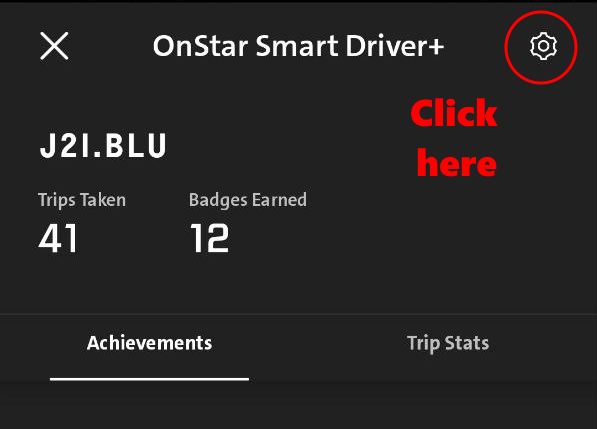
To turn the feature off, open your GM app and go to the section titled “Trip Overviews and Insights.” (You’ll see “OnStar Smart Driver” listed there). Select it.

One the next screen, click on the geat icon in the upper-right corner to open the settings for this feature.

From there, you’ll sww a switch for turning the feature off. Use this switch to opt out of the program.

What if I don’t have the App Installed?

If you don’t have the application installed but know your GM login, you can unenroll through the website.

From the OnStar SmartDriver Q&A, the steps to perform are as follows.

To unenroll via the vehicle brand website, sign into your account. Click on โ€œAccount,โ€ scroll down the page and click on โ€œData & Privacy.โ€ Scroll down to โ€œOnStar Smart Driverโ€ and select โ€œManage Settings.โ€ From there, switch off the โ€œOnStar Smart Driverโ€ toggle.

Of you want to know more about the OnStar Driver Safety Program you can read about it here. Though I thought the website was a bit light on information.

I want my collected data removed. What do I do?

You will need to contact Lexis Nexis or Verisk for more information on removal of your data. You can contact them for more information about having your data removed or seeing what data they have on you.


Posts may contain products with affiliate links. When you make purchases using these links, we receive a small commission at no extra cost to you. Thank you for your support.

Mastodon:ย @j2inet@masto.ai
Instagram:ย @j2inet
Facebook:ย @j2inet
YouTube:ย @j2inet
Telegram:ย j2inet
Twitter:ย @j2inet

7 Auto Makers Jointly Work to Expand EV Charging

BMW Group, GM, Honda, Hyundai, Kia, Mercedes-Benz, and Stellantis, are planning to engage in a joint venture to add EV chargers across the USA and Canada. This joint venture is dependent on regulatory approval and closing conditions. Their plan calls for more at least 30,000 chargers starting next year. The new chargers will support both CCS1 and NACS plugs (which, in North America translates into supporting Non-Tesla and Tesla vehicles). The new stations are to support the Plug-and-Charge protocol; this means that the charger and vehicle will communicate with each other to automatically charge the drive with the driver not having to do any more than connect the charger to their car.

Starting in 2024 the group says it plans to deploy chargers along major highway and metropolitan areas first. They plan to make use of National Eletric Vehicle Infrastructure (NEVI) funding being administered by the states to improve charging across major travel corridors. “the stations will be in convenient locations offering canopies where ever possible and amenities such as restrooms, food services, and retail operations either nearby or within the same complex.” This sounds a bit like they’ve re-invented the modern gas station, but with chargers instead of gas pumps. But this sounds like a significant improvement compared to some charging experiences, where the chargers may be in an isolated area of a parking lot with no rain cover and no buildings or restrooms nearby.

Some Auto Manufacturers Moving to Tesla Chargers

This announcement comes at the heels of several automakers announcing that they plan to transition from CCS1 chargers to support Tesla’s NACS. This includes Mercedes, Nissan, Rivian, Polestar, and Volvo. Though they made their announcements halfway through 2023, vehicles implementing the chargers are not expected until 2024 and 2025.

While I look forward to the expansion of EV charging availability, at the moment this announcement is aspirational. But it’s a space I plan to keep an eye on as I’m personally interested in seeing EV charging capabilities expand.

Statements from the Joint Venture Members

BMW Group CEO Oliver Zipse: โ€œNorth America is one of the worldโ€™s most important car markets โ€“ with the potential to be a leader in electromobility. Accessibility to high-speed charging is one of the key enablers to accelerate this transition. Therefore, seven automakers are forming this joint venture with the goal of creating a positive charging experience for EV consumers. The BMW Group is proud to be among the founders.โ€

GM CEO Mary Barra: โ€œGMโ€™s commitment to an all-electric future is focused not only on delivering EVs our customers love, but investing in charging and working across the industry to make it more accessible. The better experience people have, the faster EV adoption will grow.โ€

Honda CEO Toshihiro Mibe: โ€œThe creation of EV charging services is an opportunity for automakers to produce excellent user experiences by providing complete, convenient and sustainable solutions for our customers. Toward that objective, this joint venture will be a critical step in accelerating EV adoption across the U.S. and Canada and supporting our efforts to achieve carbon neutrality.โ€

Hyundai CEO Jaehoon Chang: โ€œHyundaiโ€™s investment in this project aligns with our โ€˜Progress for Humanityโ€™ vision in making sustainable transportation more accessible. Hyundaiโ€™s expertise in electrification will help redefine the charging landscape and we look forward to working with our other shareholders as we create this expansive high-powered charging network.โ€

Kia CEO Ho Sung Song: โ€œKia’s engagement and investment in this high-powered charging joint venture is set to increase charging access and convenience to current and future drivers and therefore accelerate the transition to EVs across North America. Kia is proud to be an important part of this joint venture with other reputable automakers as we embark on a journey towards seamless charging experiences for our customers and further strengthening Kiaโ€™s brand identity in the EV market.โ€

Mercedes-Benz Group CEO Ola Kรคllenius: โ€œThe fight against climate change is the greatest challenge of our time. What we need now is speed โ€“ across political, social and corporate boundaries. To accelerate the shift to electric vehicles, weโ€™re in favor of anything that makes life easier for our customers. Charging is an inseparable part of the EV-experience, and this network will be another step to make it as convenient as possible.โ€

Stellantis CEO Carlos Tavares: โ€œWe intend to exceed customer expectations by creating more opportunities for a seamless charging experience given the significant growth expected in the market. We believe that a charging network at scale is vital to protecting freedom of mobility for all, especially as we work to achieve our ambitious carbon neutrality plan. A strong charging network should be available for all – under the same conditions – and be built together with a win-win spirit. I want to thank each colleague involved, as it is a milestone example of our collective intelligence to listen and serve our customers.โ€


Mastodon: @j2inet@masto.ai
Instagram: @j2inet
Facebook: @j2inet
YouTube: @j2inet
Telegram: j2inet
Twitter: @j2inet

Posts may contain products with affiliate links. When you make purchases using these links, we receive a small commission at no extra cost to you. Thank you for your support.