7 Auto Makers Jointly Work to Expand EV Charging

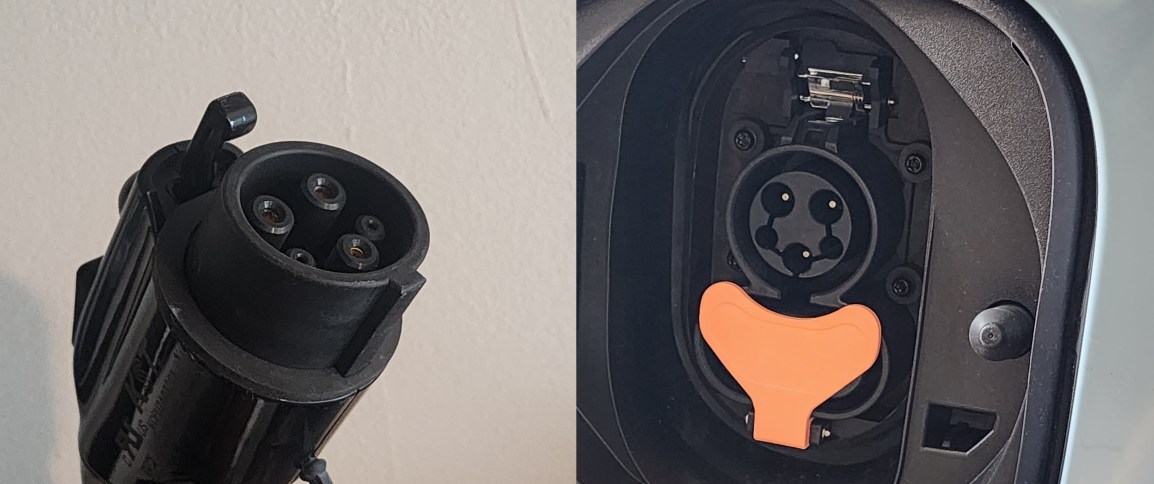
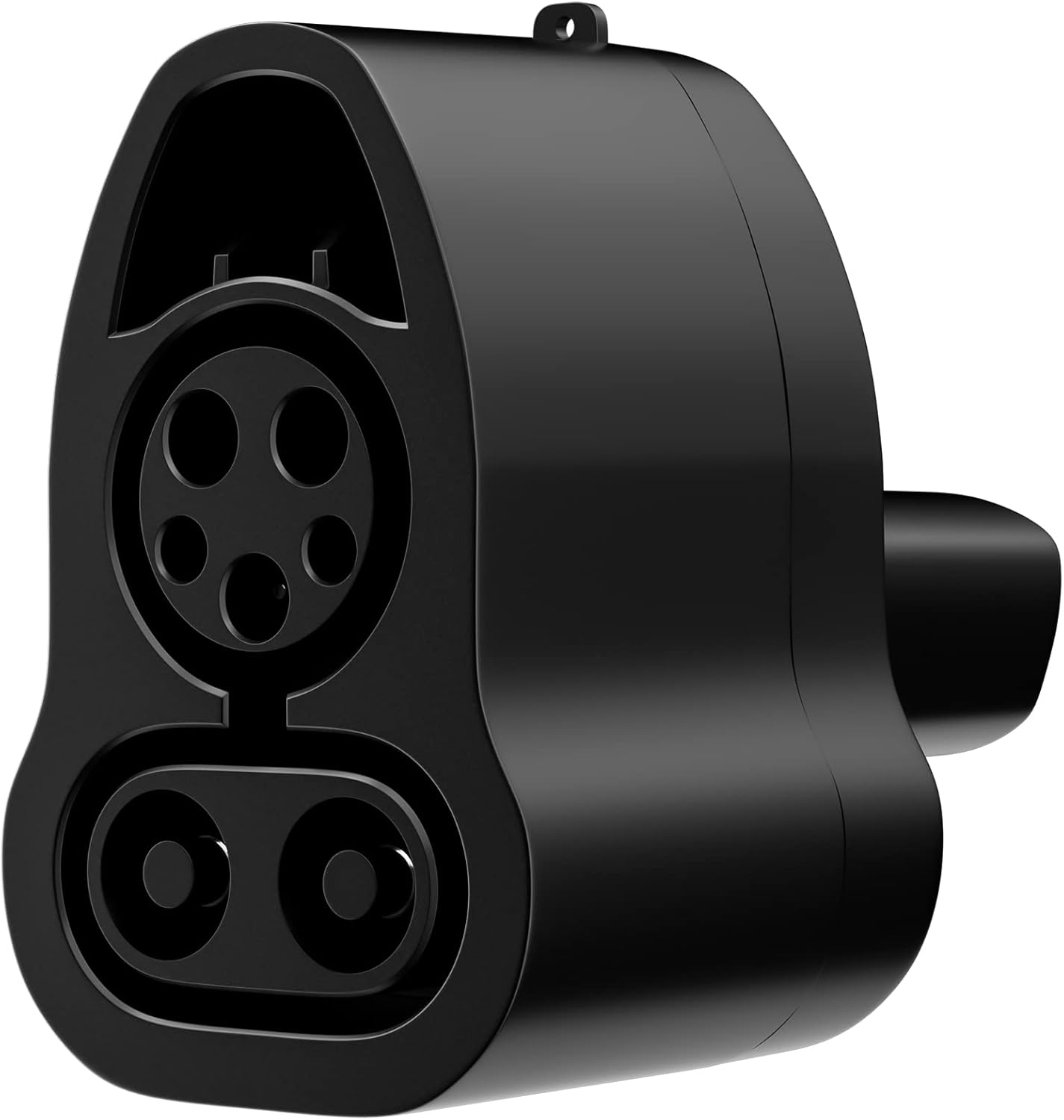
BMW Group, GM, Honda, Hyundai, Kia, Mercedes-Benz, and Stellantis, are planning to engage in a joint venture to add EV chargers across the USA and Canada. This joint venture is dependent on regulatory approval and closing conditions. Their plan calls for more at least 30,000 chargers starting next year. The new chargers will support both CCS1 and NACS plugs (which, in North America translates into supporting Non-Tesla and Tesla vehicles). The new stations are to support the Plug-and-Charge protocol; this means that the charger and vehicle will communicate with each other to automatically charge the drive with the driver not having to do any more than connect the charger to their car.

Starting in 2024 the group says it plans to deploy chargers along major highway and metropolitan areas first. They plan to make use of National Eletric Vehicle Infrastructure (NEVI) funding being administered by the states to improve charging across major travel corridors. “the stations will be in convenient locations offering canopies where ever possible and amenities such as restrooms, food services, and retail operations either nearby or within the same complex.” This sounds a bit like they’ve re-invented the modern gas station, but with chargers instead of gas pumps. But this sounds like a significant improvement compared to some charging experiences, where the chargers may be in an isolated area of a parking lot with no rain cover and no buildings or restrooms nearby.

Some Auto Manufacturers Moving to Tesla Chargers

This announcement comes at the heels of several automakers announcing that they plan to transition from CCS1 chargers to support Tesla’s NACS. This includes Mercedes, Nissan, Rivian, Polestar, and Volvo. Though they made their announcements halfway through 2023, vehicles implementing the chargers are not expected until 2024 and 2025.

While I look forward to the expansion of EV charging availability, at the moment this announcement is aspirational. But it’s a space I plan to keep an eye on as I’m personally interested in seeing EV charging capabilities expand.

Statements from the Joint Venture Members

BMW Group CEO Oliver Zipse: “North America is one of the world’s most important car markets – with the potential to be a leader in electromobility. Accessibility to high-speed charging is one of the key enablers to accelerate this transition. Therefore, seven automakers are forming this joint venture with the goal of creating a positive charging experience for EV consumers. The BMW Group is proud to be among the founders.”

GM CEO Mary Barra: “GM’s commitment to an all-electric future is focused not only on delivering EVs our customers love, but investing in charging and working across the industry to make it more accessible. The better experience people have, the faster EV adoption will grow.”

Honda CEO Toshihiro Mibe: “The creation of EV charging services is an opportunity for automakers to produce excellent user experiences by providing complete, convenient and sustainable solutions for our customers. Toward that objective, this joint venture will be a critical step in accelerating EV adoption across the U.S. and Canada and supporting our efforts to achieve carbon neutrality.”

Hyundai CEO Jaehoon Chang: “Hyundai’s investment in this project aligns with our ‘Progress for Humanity’ vision in making sustainable transportation more accessible. Hyundai’s expertise in electrification will help redefine the charging landscape and we look forward to working with our other shareholders as we create this expansive high-powered charging network.”

Kia CEO Ho Sung Song: “Kia’s engagement and investment in this high-powered charging joint venture is set to increase charging access and convenience to current and future drivers and therefore accelerate the transition to EVs across North America. Kia is proud to be an important part of this joint venture with other reputable automakers as we embark on a journey towards seamless charging experiences for our customers and further strengthening Kia’s brand identity in the EV market.”

Mercedes-Benz Group CEO Ola Källenius: “The fight against climate change is the greatest challenge of our time. What we need now is speed – across political, social and corporate boundaries. To accelerate the shift to electric vehicles, we’re in favor of anything that makes life easier for our customers. Charging is an inseparable part of the EV-experience, and this network will be another step to make it as convenient as possible.”

Stellantis CEO Carlos Tavares: “We intend to exceed customer expectations by creating more opportunities for a seamless charging experience given the significant growth expected in the market. We believe that a charging network at scale is vital to protecting freedom of mobility for all, especially as we work to achieve our ambitious carbon neutrality plan. A strong charging network should be available for all – under the same conditions – and be built together with a win-win spirit. I want to thank each colleague involved, as it is a milestone example of our collective intelligence to listen and serve our customers.”


Mastodon: @j2inet@masto.ai
Instagram: @j2inet
Facebook: @j2inet
YouTube: @j2inet
Telegram: j2inet
Twitter: @j2inet
Posts may contain products with affiliate links. When you make purchases using these links, we receive a small commission at no extra cost to you. Thank you for your support.

Xamarin: “The Application cannot be launched because it is not installed”

Working on a Xamarin project for iOS from a Windows PC I ran into a situation where I could no longer debug the application. There had been no changes in source code from when I could debug to when I could not. A search for the error took me to other places where the problem had been discussed but not resolved. While I’ve been able to resolve the problem for myself, the other discussions were closed and I couldn’t place a resolution there. In the absence of another place to put this solution, I’m hosting it myself.

The more complete text of the error is as follows.

The application 'MyApplication' cannot be launched or debugged because it's not installed The app has been terminated.

Ofcourse, MyApplication would have the name of your application if you encounter this. While I don’t know what causes it, resolve it is a simple matter of erasing files. For my Xamrin project I’m using Visual Studio Community 2022 on a Windows Machine and communicating with an M1 Mac for compilation. On the M1, I had to navigate to the path $HOME/Library/Caches/Xamarin/mtbs/builds/ and erase the files and folders there. Returning to my solution on Windows, I got some other error about files not being found that was resolved by manually selecting dependency projects and recompiling those. After that, I was about to compile and debug the project like I could before.

I’m not sure what causes this error. I would have liked to have looked into it further. But delivery deadlines do not allow further examination. That said, there have been a few other low-frequency errors that I’ve encountered that are resolved by simply clearing this folder.

I hope that this solution is helpful to someone.


Mastodon: @j2inet@masto.ai
Instagram: @j2inet
Facebook: @j2inet
YouTube: @j2inet
Telegram: j2inet
Twitter: @j2inet

Posts may contain products with affiliate links. When you make purchases using these links, we receive a small commission at no extra cost to you. Thank you for your support.

Enterprise Apple Certificates and Expiration

I recently explained the expiration behaviour of Apple Distribution certificates to someone, and thought it was worth sharing.

I often work on iOS applications signed with an Enterprise certificate. Applications signed with these certificates can be distributed directly to the device, such as through a Mobile Device Manager or through the browser. They cannot be distributed through the app store. These applications are signed with a distribution certificate. The Distribution Certificate can last up to one year, but may expire sooner. The distribution certificate will not last beyond the expiration of the account. If a app were signed by an account that has 7 months until renewal is needed, then the distribution certificate will also expire in 7 months.

Usually, this hasn’t been a problem for me. Many of the applications that I work on are either to be used for a predefined time period, such as for a holiday event, and then get shelved. Or they are applications that are receiving updates, in which case they will occasionally get new distribution certificates. I had a client that requested an iOS application be signed such that it would not expire. Someone in the development department for the client had resigned the application and redeployed it when it reached its first expiration period. But he wanted to be independent of their development department all together.

Unfortunately, this is not an option for iOS apps. The only way to have a version of the application that is immune to expiration would be to run it on an operating environment that doesn’t demand apps be signed with certificates that expire in a year or less. That is an option with Windows and Android, but not with iOS. For the best situation with iOS one needs an Mobile Device Manager (MDM). With an MDM, there is the option of making an updated distribution profile and pushing that out to the devices. Without the MDM then rebuild-and-redeploy is the only option.

This may be something that you’d like to consider when choosing hardware for a solution within an organization. iOS hardware is consistent in its form, performance, so on. While Android offers more openness, the variances in hardware is both an advantage and a disadvantage. I appreciate the ability to be able to make an app and install it to an Android device very quickly. OfCourse, the ability to do this easily also comes with the potential of bad actors doing the same. The barrier to getting malicious code on an iOS device is a bit higher.


Posts may contain products with affiliate links. When you make purchases using these links, we receive a small commission at no extra cost to you. Thank you for your support.

Mastodon: @j2inet@masto.ai
Instagram: @j2inet
Facebook: @j2inet
YouTube: @j2inet
Telegram: j2inet
Twitter: @j2inet

Restoring Life to a Game Gear

Recently, the Game Gear of a friend ceased to function. As is the case with many old electronics, I suspected that the capacitors in the unit had gone bad. Electrolyte capacitors contain a fluid and given enough time, that fluid can evaporate. Between the chemistry of soldered in batteries reaching the end of their lives and capacitors drying out, some electronics are doomed to start from the beginning. Thankfully these components are not necessarily hard to replace. Before having taken possession of the Game Gear, I suspected it was the capacitors and got information on the values. I have a box of capacitors in the house already.

When I received the unit and tried turning it on, the unit has no response at all. This configuration had a bolted on batter pack that used a couple of 18650 batteries. The battery pack was dead, and refused to charge. Fixing this is pretty easy with the right tools. In addition to a couple of 18650 batteries had had a couple of metalic strips to connect them along with insulating shrink wrap to prevent the batteries from being electrically exposed.

The Game Gear itself had lots of potential points of failure. There are a lot of capacitors distributed throughout the unit. The device has three circuit boards. One circuit-board has the power components on it, another has the audio circuitry, and then there is the main board. All of these boards have capacitors on them. But I thought most likely the ones on the power circuit board were my culprits. Rather than testing them, I replaced all three. My repair actions stopped there because the unit was restored to full functionality once those were placed.

Having opened the Game Gear though I found that its construction is fairly straight forward. I decided to start looking at some other old video game systems that I have within the house. When I had some of these as a child, how ever they worked was magical to me! Looking at them now, I see them as something that I can understand and manipulate or modify. That lead to a quick examination of the circuit schematics and the DRM that each one of these units used. Of all of the units I considered, the original Game Box and some of it’s derivatives (GameBoy Color, GameBoy Pocket) appears to be one of the easiest devices to target. I’m thinking of setting up a development environment for one, writing a “hello world” program, writing it to a cartridge, and seeing it run. I’ll be writing more about that here.


Posts may contain products with affiliate links. When you make purchases using these links, we receive a small commission at no extra cost to you. Thank you for your support.

Mastodon: @j2inet@masto.ai
Instagram: @j2inet
Facebook: @j2inet
YouTube: @j2inet
Telegram: j2inet
Twitter: @j2inet
In-App Static Web Server with HttpListener in .Net

I was working on a Xamrin iOS application (using .Net) and one of the requirements was for the application to support a web view for presenting another form. The form would need to be served from within the application. There are lots of ways that one could accomplish this. For the requirements this only needed to be a static web server. The contents would be delivered via a zip file. Creating a static web server is pretty easy. I’ve created one before. Making this one would be easier.

What made this one so easy is that .Net provides the HttpListener class, which handles most of the socket/network related things for us. It will also parse out information from the incoming request and we can use it to generate a well formatted supply. It contains no logic for what replies should be sent for what circumstances, or for retrieving files from the file system, so on. That’s the part I had to build.

I was given an initial suggestion of getting the Zip file, using the .Net classes to decompress it and write it to the iPad’s file system, and retrieve the files from there. I started with that direction, but ended up with a different solution. Since the amount of data in the static website would be small, I thought it would be fine to leave it in the compressed archive. But if I changed my mind on this I wanted to be able to make adjustments with minimal effort.

Receiving Connections

To receive connections, the TcpListener class needs to know the prefix strings for requests. This prefix will usually contain http://localhost with a port number, such as http://localhost:8081/. It must end with the slash. Multiple prefixes can be specified. If you want the server to listen on all adapters for a specific port localhost could be replaced with * here. After creating a HttpListener these prefixes must be added to the listener’s Prefix collection.

String[] PrefixList
{
    get
    {
        return new string[] { "http://localhost:8081/",  "http://127.0.0.1:8081/", "http://192.168.1.242:8081/" };
    }
}

void ListenRoutine()
{
    _keepListening = true;
    listener = new HttpListener();
            
    foreach (var prefix in PrefixList)
    {
        listener.Prefixes.Add(prefix);
    }
            
    listener. Start();
    //...more code follows
}

The listener is ready to start listening for requests now. A call to TcpListener::GetContext() will block until a request comes in. Since it blocks, everything that I’m doing with the listener is on a secondary thread. I use the listener in a loop to keep replying to requests. The HttpListenerContext object contains an object representing the request (HttpListenerRequest) and the response (HttpListenerResponse). From the request, I am interested in the AbsolutePath of the request. This is the request URL Path with any query parameters removed. I’m also interested in the verb that was used on the request. For the server that I made I’m only handling GET requests.

while (_keepListening)
{
    //This call blocks until a request comes in
    HttpListenerContext context = listener.GetContext();
    HttpListenerRequest request = context.Request;
    HttpListenerResponse response = context. Response;


    ///Handle the request here

}
listener. Stop();

Let’s say that I wanted my server to return a hard coded response. I would need to know the size of that response in bytes. There is an OutputStream on the HttpListenerResponse object that I will write the entirety of my response to. Before I do, I set the ContentLength64 member of the HttpListenerResponse object.

async void HandleResponse(HttpListenerRequest request, HttpListenerResponse response)
{
    String responseString = "<html><body>Hello World</body></html>";
    byte[] responseBytes = System.Text.Encoding.UTF8.GetBytes(responseString);
    response.ContentLength64 = responseBytes.Length;
    var output = response.OutputStream;
    await output.WriteAsync(responseBytes, 0, responseBytes.Length);
    await output.FlushAsync();
    output. Close();
}

When I run the code now and navigate to the URL, I’ll see the text “Hello World” in the browser. But I want to be able to send more than just a hardcoded response. To make the server more useful it needs to send the property Mime Type header for certain content. I need to be able to easily change the content that it servers. To satisfy this goal I’ve externalized the data from the program and I’ve defined an interface to aid in adding new ways for the server to respond to the request. I’ll also want to be able to define other classes with different behaviours for requests. For those classes I’ve made the interface IRequestHandler. It defines two methods and two properties that the handlers must implement.

  • Prefix – this is a path prefix for the handler. It will only be considered as a class that can handle a response if the request’s absolute path starts with this prefix. If this field is an empty string then it can be considered for any request.
  • DefaultDocument – if no file name is specified in the path, then this is the document name that will be used.
  • CanHandleRequest(string method, string path) – This gives the class basic information on the request. If the class can handle the request it should return true from this method. If it returns false, it will no be given the request to process.
  • HandleRequest(HttpListenerRequest, HttpListenerResponse) – processes the actual request.

A list of these handlers will be made and added to a list. Each handler is considered for be given the request to handle one at a time until one is found that is appropriate for the request. When one is, it processes the request and no further handlers are considered. One of the handlers that I defined is the FileNotFoundHandler. It is the simplest of the request handlers. It can handle anything. Later, I’ll set this up as the last handler to be considered. If nothing else handles a request, thisn my FileNotFoundHandler will run.

public class FileNotFoundHandler : IRequestHandler
{
    public string Prefix => "/";

    public string DefaultDocument => "";

    public bool CanHandleRequest(string method, string path)
    {
        return true;
    }

    public async void HandleRequest(HttpListenerRequest request, HttpListenerResponse response)
    {
        String responseString = $"<html><body>Cannot find the file at the location [{request.Url.ToString()}]</body></html>";
        byte[] responseBytes = System.Text.Encoding.UTF8.GetBytes(responseString);
        response.StatusCode = 404;
        response.ContentLength64 = responseBytes.Length;
        var output = response.OutputStream;
        await output.WriteAsync(responseBytes, 0, responseBytes.Length);
        await output.FlushAsync();
        output. Close();
    }
}

Going back to the local server, I’m adding a list of IRequestHandler objects. The list will start with only the FileNotFoundHandler in it. Any other handlers added will be added at the front of the list, pushing everything back by one position. The last item added to the list will receive the highest priority.

List<IRequestHandler> _handlers = new List<IRequestHandler>();

public LocalServer(bool autoStart = false) {
    var fnf = new FileNotFoundHandler();
    AddHandler(fnf);
    if(autoStart)
    {
        Start();
    }
}

public void AddHandler(IRequestHandler handler)
{
    _handlers. Insert(0, handler);
}

void ListenRoutine()
{
    _keepListening = true;
    listener = new HttpListener();
            
    foreach (var prefix in PrefixList)
    {
        listener.Prefixes.Add(prefix);
    }
            
    listener. Start();
    while (_keepListening)
    {
        //This call blocks until a request comes in
        HttpListenerContext context = listener.GetContext();
        HttpListenerRequest request = context. Request;
        HttpListenerResponse response = context. Response;
        bool handled = false;
        foreach(var handler in _handlers)
        {
            if(handler.CanHandleRequest(request.HttpMethod, request.Url.AbsolutePath))
            {
                handler.HandleRequest(request, response);
                handled = true;
                break;
            }
        }
        if (!handled)
        {
            HandleResponse(request, response);
        }
    }
    listener. Stop();

}

This completes the functionality of the server itself, but I still need a handler. I mentioned earlier I wanted to serve content from a zip file. To do this I made a new handler named ZipRequestHandler. Some of the functionality that it will need will likely be part of almost any handler. I’ll put that functionality in a base class named RequestHandlerBase. This base class will define a DefaultDocument of index.html. It is also able to provide mime types based on a file extension. To retrieve mime types I have a string dictionary that maps an extension to a mimetype. Within the code I define some basic mime types. I don’t want all the mimetypes to be defined in source code. I have a JSON file that has a total of about 75 mime types in it. If that file were omitted for some reason the server would still have the foundational mime types provided here.

static StringDictionary ExtensionToMimeType = new StringDictionary();

static RequestHandlerBase()
{

            
    ExtensionToMimeType.Clear();
    ExtensionToMimeType.Add("js", "application/javascript");
    ExtensionToMimeType.Add("html", "text/html");
    ExtensionToMimeType.Add("htm", "text/html");
    ExtensionToMimeType.Add("png", "image/png");
    ExtensionToMimeType.Add("svg", "image/svg+xml");
    LoadMimeTypes();
}

        static void LoadMimeTypes()
        {
            try
            {
                var resourceStreamNameList = typeof(RequestHandlerBase).Assembly.GetManifestResourceNames();
                var nameList = new List<String>(resourceStreamNameList);
                var targetResource = nameList.Find(x => x.EndsWith(".mimetypes.json"));
                if (targetResource != null)
                {
                    DataContractJsonSerializer dcs = new DataContractJsonSerializer(typeof(LocalContentHttpServer.Handler.Data.MimeTypeInfo[]));
                    using (var resourceStream = typeof(RequestHandlerBase).Assembly.GetManifestResourceStream(targetResource))
                    {
                        var mtList = dcs.ReadObject(resourceStream) as MimeTypeInfo[];
                        foreach (var m in mtList)
                        {
                            ExtensionToMimeType[m.Extension.ToLower()] = m.MimeTypeString.ToLower();
                        }
                    }

                }
            } catch
            {

            }
        }

Getting a mime type is a simple dictionary entry lookup. We will see this used in the child class ZipRequestHandler.

public static string GetMimeTypeForExtension(string extension)
{
    extension= extension.ToLower();
    if(extension.Contains("."))
    {
        extension = extension.Substring( extension.LastIndexOf("."));
    }
    if(extension.StartsWith('.'))
        extension = extension.Substring(1);
    if(ExtensionToMimeType.ContainsKey(extension))
    {
        return ExtensionToMimeType[extension];
    }
    return null;
}

The ZipRequestHandler accepts either a path to an archive or a ZipArchive object along with a prefix for the requests. Optionally someone can set the caseSensitive parameter to disable the ZipRequestHandler‘s default behaviour of making request case sensitive. I’ve defined a decompress parameter too, but haven’t implemented it. When I do, this parameter will be used to decide if the ZipRequestHandler will completely decompress an archive before using it or keep the data compressed in the zip file. The two constructors are not substantially different. Let’s look at the one that accepts a string for the path to the zip file.

ZipArchive _zipArchive;
readonly bool _decompress ;
readonly bool _caseSensitive = true;
Dictionary<string, ZipArchiveEntry> _entryLookup = new Dictionary<string, ZipArchiveEntry>();

public ZipRequestHandler(String prefix, string pathToZipArchive, bool caseSensitive = true, bool decompress = false):base(prefix)
{
    FileStream fs = new FileStream(pathToZipArchive, FileMode.Open, FileAccess.Read);
    _zipArchive = new ZipArchive(fs);            
    this._decompress = decompress;
    this._caseSensitive = caseSensitive;
    foreach (var entry in _zipArchive.Entries)
    {
        var entryName = (_caseSensitive) ? entry.FullName : entry.FullName.ToLower();
        _entryLookup[entryName] = entry;
    }
}

public override bool CanHandleRequest(string method, string path)
{
    if (method != "GET") return false;
    return Contains(path);
}

Given the ZipArchive I collect the entries in the zip and their path. When request come in I’ll use this to jump straight to the relevant entry. The effect of the caseSensitive parameter can be seen here. If the class is intended to run case insensitive, then I convert file names to lower case. For later lookups, the search name specified will also be converted to lower case. Provided that a request is using the GET verb and requests a file that is contained within the archive this class will report that it can handle the request.

Ofcourse, the handling of the request is where the real work happens. A request may have query parameters appended to the end of it. We don’t want those for locating a file. Url.AbsolutePath will give the request path with the query parameters removed. If the URL path is for a folder, then we append the name of the default document to the path. we also remove any leading slashes so that the name matches the path within the ZipArchive. While I use TryGetValue on the dictionary to retrieve the ZipEntry, this should always succeed since there was an earlier check for the presence of the file through the CanHandleRequest call. We then get the mimeType for the file using the method RequestHandlerBase::GetMimeTypeForExtension. If a mimetype was found then the value for the header Content-Type is set.

The rest of the code looks similar to the code that was returning the hard coded responses. The ZipEntry abstracts away the details of getting a file out of a ZipArchive so nicely that it looks like reading from any other stream. The file is read and sent to the requester.

public override void HandleRequest(HttpListenerRequest request, HttpListenerResponse response)
{
    var path = request.Url.AbsolutePath;

    if (path.EndsWith("/"))
        path += DefaultDocument;
    if (path.StartsWith("/"))
        path = path.Substring(1);

    if (_entryLookup.TryGetValue(path, out var entry))
    {
        var mimeType = GetMimeTypeForExtension(path);
        if(mimeType != null)
        {
            response.AppendHeader("Content-Type", mimeType);
        }
        try
        {
            var size = entry.Length;
            byte[] buffer = new byte[size];
            var entryFile = entry.Open();
            entryFile.Read(buffer, 0, buffer.Length);

            var output = response.OutputStream;
            output.Write(buffer, 0, buffer.Length);
            output.Flush();
            output.Close();
        }catch(Exception exc)
        {

        }
    }
    else
    {
                
    }
}

The code in its present state meets most of the current needs. I won’t be sharing the final version of the code here. That will be in a private archive. But I can share a version that is functional. You can find the source code on GitHub at the following address.

https://github.com/j2inet/LocalStaticWeb.Net


Posts may contain products with affiliate links. When you make purchases using these links, we receive a small commission at no extra cost to you. Thank you for your support.

Mastodon: @j2inet@masto.ai
Instagram: @j2inet
Facebook: @j2inet
YouTube: @j2inet
Telegram: j2inet
Twitter: @j2inet

Hashing String Data in JavaScript, C#, C++, and SQL Server

I’m working with some data that needs to be hashed in both C# and JavaScript. Usually converting an algorithm across languages is pretty trivial. But in JavaScript the regular numeric type is a double-precision 64-bit number. While this sounds sufficiently large, when used as an integer this only provides 53-bits of precision. As you might imagine, using a 53-bit numeric type on one system and 64-bit on another would result in differences in outcome. This would make hased data between these two functions incompatible with each other. To avoid these potential problems, I needed to use a different type. I used BIGINT.

A potential issue with BIGINT is that it can accommodate extremely large values. This isn’t usually a problem, but I need to have identical behaviour for the hash function to have identical results across the languages. Fixing this is simple though. I only need to perform the bitwise AND operation to truncate any bits in the BIGINT beyond position 64. The hast function I’m using was originally found on StackOverflow. This might not be the final Hash function that I use, but for now it works.

A key thing to note in the JavaScript implementation is the n suffix on the numbers. This ensures that they are all using the BIGINT type. Also take note of the bitwise operation with the number 0xFFFFFFFFn. This ensures that the number is truncated and acting like a 64-bit integer.

// 
function hashString(s) { 
    const A =  54059n ;
    const B = 76963n ;
    const C = 86969n;
    const FIRSTH = 37n;
   var h = FIRSTH;
   for ( var i=0;i<s.length;++i) {
        var c = BigInt(s.charCodeAt(i));
        h = ((h * A) ^ (((c) *B))) & 0xFFFFFFFFFFFFFFFFn;
   }
   return h; 
}

The C++ implementation (used for the Arduino ) follows. Using native types in C there’s nothing special that needs to be done.

#define A 54059   /* a prime */
#define B 76963   /* another prime */
#define C 86969   /* yet another prime */
#define FIRSTH 37 /* also prime */
unsigned long hash_str(String s) {
  unsigned long h = FIRSTH;
  for (auto i = 0; i < s.length(); ++i) {
    h = ((h * A) ^ (s[i] * B)) & 0xFFFFFFFFFFFFFFFF;
    //s++;
  }
  return h;  
}

The difference between the C# and C++ versions o the code are only notational. They both handle 64-bit integers just fine with no special tricks needed.

ulong hashString(String s) { 
    const ulong A =  54059ul ;
    const ulong B = 76963ul ;
    const ulong C = 86969ul;
    const ulong FIRSTH = 37ul;
   var h = FIRSTH;
   var stringBytes = Encoding.ASCII.GetBytes(s);
   for ( var i=0;i<stringBytes.Length;++i) {
        var c = stringBytes[i];
        h = ((h * A) ^ (((c) *B))) & 0xFFFFFFFFFFFFFFFFul;
   }
   return h; 
}

The differences for Kotlin are also notational, but significantly different from the C# and C++ in how the bitwise operators are expressed.

    fun hashString(s:String): ULong {
        val A:ULong =  54059u ;
        val B:ULong = 76963u ;
        val C:ULong = 86969u;
        val FIRSTH:ULong = 37u;
        var h = FIRSTH;
        var stringBytes = s.toByteArray()
        for ( i in 0..stringBytes.size-1) {
            var c = stringBytes[i].toULong();
            h = ((h * A) xor (((c) * B))) and 0xFFFFFFFFFFFFFFFFu;
        }
        return h;
    }

After having written this post, I was working in SQL Server. I was going to save some of this hashed data within SQL Server and decided to try with implementing a hash function there. Everything started out the same, but I ran into a notable problem. I encountered arithmetic overflow issues with declaring the mask 0xFFFFFFFFFFFFFFFF. This mask isn’t strictly necessary, but I’ve placed it there should I happen to use one of these implementations to hash to a smaller data type. I was using the BIGINT data type. But that data type only provides 63-bits of precision, not 64. Knowing that now I could just use a smaller mask to have a hash function that works identically across environments. If you’d like to try it out, the SQL Server implementation follows here.

CREATE FUNCTION HashString
(
	@SourceString as VARCHAR(15)
)
RETURNS BIGINT
AS
BEGIN
    DECLARE @A BIGINT =  54059
    DECLARE @B BIGINT = 76963
    DECLARE @C BIGINT = 86969
    DECLARE @FIRSTH BIGINT = 37
	DECLARE @StrLEn BIGINT = LEN(@SourceString)	
	DECLARE @Index BIGINT = 1
	DECLARE @MASK BIGINT = 0xFFFFFFFFFFFF
	DECLARE @Letter CHAR
	DECLARE @LetterCode BIGINT
	DECLARE @H BIGINT = @FIRSTH
	WHILE @Index <= @StrLEn	
	BEGIN
		SET @Letter = SUBSTRING(@SourceString, @Index, 1)
		SET @LetterCode = UNICODE(@Letter)
		SET @H = ((@H * @A) ^ (@LetterCode * @B)) & @MASK
		SET @Index = @Index + 1		
	END	
	return  @H;
END
GO

Mastodon: @j2inet@masto.ai
Instagram: @j2inet
Facebook: @j2inet
YouTube: @j2inet
Telegram: j2inet
Twitter: @j2inet

Posts may contain products with affiliate links. When you make purchases using these links, we receive a small commission at no extra cost to you. Thank you for your support.

Gaming Through Netflix

When I tell someone that I’m about to play a game on Netflix, the response is the same.

“A game on Netflix, what are you talking about?”

I guess this isn’t well know, but Netflix publishes and licenses video games. most of these have been casual games though. My attention was caught by a recent game made available through Netflix that was an action game. “Teenage Mutant Ninja Turtles: Shredder’s Revenge” was recently made available on a range of systems. The look to the game reminds me of some previous TMNT games that I enjoyed, and I wanted to get this one. I never got around to making a purchase because I found the game on Netflix. Great! But how exactly does someone play a game on Netflix? How does someone play **this** game, which allows up to 4 people to play at once! Let’s find out.

Netflix releases games as mobile games. If you have an iOS or Android device, then you have what it takes to play the games. You can usually find the games by searching for “Netflix” in either of the app stores. But I find it easier to open the mobile app and scroll down vertically until you find a section listing the games. Selecting one of the games shows more information on it and presents a button to open the store for installing it. On Android, if the game is already installed, this will but a button to open and play the game instead.

Of course, the games can be played right away without any accessories. I personally hate playing arcade or action games on phone with on screen controls. Thankfully, one is not limited to that as the only form of control. The game supports game controllers, and you may be able to play on a larger external display (such as a TV) if using additional accessories.

Controllers

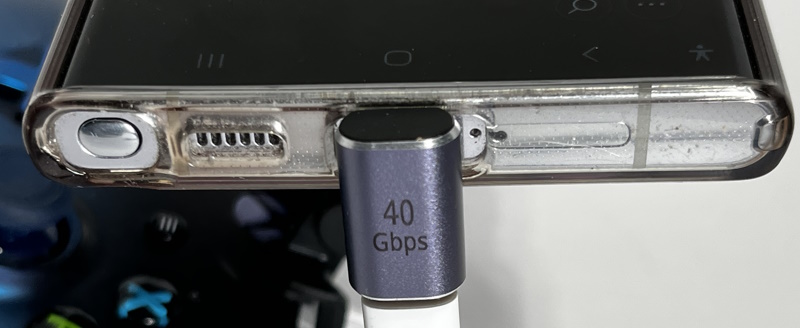
Both iOS and Android support game controllers. On iOS, you only need to pair the controller with the phone using the Bluetooth settings. On Android, you can either pair through the Bluetooth settings or you can connect it to the phone with a USB cable. I preferred this method so that I did not have to unpair the controller with the other device with which I use it. Recent Xbox controllers use USB-C as their connector. If you have an older controller, it uses USB-micro. You’ll need a USB-C to USB-micro cable. I preferred to use the shortest cable possible. I also use a USB-C right angle adapter to keep the cable a little neater.

External Display

You can play the games on an external display too. Well, maybe. It depends on your phone. Many Samsung devices will work with generic USB-C to HDMI adapters. If you have some other Android device, it may or may not support USB-C. Some iOS devices will work with HDMI adapters too. You just need to have an appropriate device to match either your Lightning port or USB-C port (I used this Lightning to HDMI adapter). Using an external display tends to drain the battery faster. It’s a good idea to use an adapter that also allows charging. With some of my Samsung devices I have found this can be tricky. The Samsung devices use USB-PD (Power Delivery). The device request some amount of power from the power supply. It the phone detects a different in the amount requested and the amount received, the phone will alert the user that there is potentially moisture on the USB-C port. Instead of using a PD power supply I had better results using a “dumb” power supply when pairing with the display adapter or using an HDMI adapter labeled as working with Samsung DEX. The video adapter that I preferred to use for Android was sold under the description of a USB-C Thunderbolt 3 Docking Station. My phone and tablet do not support Thunderbolt, but this doesn’t matter, the docking station works fine.

Multi-Player

I had hoped that I could connect multiple controllers to my Android device to play with multiple people. Sadly, this isn’t the case. The multiplayer works over the Internet with each person having a device. When you are starting the game, the character select screen also has a button to “Party Up” with two modes of “partying.” One can either create a private party or a public party. For the private party, a 6 character text string displays on the screen. Others that you want to join the party need to enter this code. If you select a public party then you can join up with others that wish to play online. For either option, you can either create a party, or you can join one.

Transferring Progress Between Devices

As you might expect, with Netflix games your progress is saved with your profile. If you go to a different device but use the same profile your progress shows up there. There’s nothing that you need to do. This is automatic.

Will It Replace my Game Streaming Service?

No. In its current form, Netflix Games are not going to replace Xbox or Luna streaming. But they don’t try to fill that space. Many of the games in their library are more casual game. At the time that I’m writing this, there are a total of about 50 games in the Netflix gaming library. While they wouldn’t be competing those larger game streaming service, the games do have their own charm to them. There are probably about 5 games that have support for controllers, including TMNT, Spiritfarer, and Stranger Things 3. Right now their games lean more casual (which to me makes sense, since that may be of broader interest). I do think that it is a space to watch as Netflix continues to find ways to grow.


Posts may contain products with affiliate links. When you make purchases using these links, we receive a small commission at no extra cost to you. Thank you for your support.

Mastodon: @j2inet@masto.ai
Instagram: @j2inet
Facebook: @j2inet
YouTube: @j2inet
Telegram: j2inet
Twitter: @j2inet

Calculating the Distance Between Geographical Coordinates in Kotlin

There’s an equation I’ve often found useful and have generally used it for calculating the distance between geographical coordinates. Most recently, I used the equation in a program for a 360 interactive video player to find the distance between an area that a user selected and some point of interest. Fundamentally it is an equation measuring distances on a sphere and has many uses.

I was adjusting the source code to be used in an Android application, and thought that the code might be useful to others. I am reposting it here. I tend to work in SI units, but you could use this for miles, yards, inches, or another unit if you have the radius of the sphere of interest. The constants defined in the class provide the radius of the rarth in miles, kilometers, and meters. One of these values (or your own custom value) must be passed to have the results returned to be scaled for those units.

class DistanceCalculator {
     companion object {
         public val EarthRadiusInMiles = 3956.0;
         public val EarthRadiusInKilometers = 6367.0;
         public val EarthRadiusInMeters = EarthRadiusInKilometers*1000;
     }

     fun ToRadian(`val`: Double): Double {
         return `val` * (Math.PI / 180)
     }

     fun ToDegree(`val`: Double): Double {
         return `val` * 180 / Math.PI
     }

     fun DiffRadian(val1: Double, val2: Double): Double {
         return ToRadian(val2) - ToRadian(val1)
     }

     public fun CalcDistance(p1: coordinate, p2: coordinate): Double {
         return CalcDistance(
             p1.latitude,
             p1.longitude,
             p2.latitude,
             p2.longitude,
             EarthRadiusInKilometers
         )
     }

     fun Bearing(p1: coordinate, p2: coordinate): Double? {
         return Bearing(p1.latitude, p1.longitude, p2.latitude, p2.longitude)
     }

    fun Bearing(lat1: Double, lng1: Double, lat2: Double, lng2: Double): Double? {
        run {
            val dLat = lat2 - lat2
            var dLon = lng2 - lng1
            val dPhi: Double = Math.log( Math.tan(lat2 / 2 + Math.PI / 4) / Math.tan(lat1 / 2 + Math.PI / 4) )
            val q: Double =
                if (Math.abs(dLat) > 0) dLat / dPhi else Math.cos(lat1)
            if (Math.abs(dLon) > Math.PI) {
                dLon = if (dLon > 0) -(2 * Math.PI - dLon) else 2 * Math.PI + dLon
            }
            //var d = Math.Sqrt(dLat * dLat + q * q * dLon * dLon) * R;
            return ToDegree(Math.atan2(dLon, dPhi))
        }
    }

    public fun CalcDistance(
         lat1: Double,
         lng1: Double,
         lat2: Double,
         lng2: Double,
         radius: Double
     ): Double {
         return radius * 2 * Math.asin(
             Math.min(
                 1.0, Math.sqrt(
                     Math.pow(
                         Math.sin(
                             DiffRadian(lat1, lat2) / 2.0
                         ), 2.0
                     )
                             + Math.cos(ToRadian(lat1)) * Math.cos(ToRadian(lat2)) * Math.pow(
                         Math.sin(
                             DiffRadian(lng1, lng2) / 2.0
                         ), 2.0
                     )
                 )
             )
         )
     }
 }

Posts may contain products with affiliate links. When you make purchases using these links, we receive a small commission at no extra cost to you. Thank you for your support.

Mastodon: @j2inet@masto.ai
Instagram: @j2inet
Facebook: @j2inet
YouTube: @j2inet
Telegram: j2inet
Twitter: @j2inet

Connecting to AWS IoT’s MQTT Server with .Net

A client I was working with wanted communication between systems for a solution to use AWS IoT for broadcasting messages among the computers making up the solution and controlling various computers. I worked on the solution for the system, but had minimal access to their AWS resources, which is consisten with their security policies. Usually, if I have access to the AWS subscription I could use an MQTT viewer that is part of the service for performing some diagnostic tasks. With this client, I didn’t have that access and had to make my own viewer when performing diagnostics.

Making a viewer is pretty easy once you have the resources that you need. I chose WPF because of the speed at which a functional UI could be build along with M2Mqtt as an MQTT client. Before writing any code, there was some work that needed to be done with the certificates. When accessing an AWS MQTT Instance, the information that you will need includes the domain name for the MQTT instance, an Amazon root certificate, a certificate and private key file. You’ll need this information packaged in a pfx file to easily use it with M2Mqtt. Packaging these certificates that way is just a matter of running a command. For the files I had, let’s use these names.

  • 000-certificate.pem.crt – The certificate file for the AWS MQTT Instance
  • 000-private.pem.key – The private key for the AWS MQTT instance
  • AmazonRootCA1.cer – The AWS root certificate

Using those file names, the command that I used was as follows.

openssl pkcs12 -export -in .\000-certificate.pem.crt -inkey .\000-private.pem.key -out certificate.pfx -certfile .\AmazonRootCA1.cer

After this command runs, I have a file named certificate.pfx. I’ll be using this in my .Net viewer.

In the interest of keeping the program reusable, I’ve placed information on the paths to the certificate files in the applications settings. If I needed to change these files post-compilation, they are in a JSON file. These settings include the following.

  • BrokerDomainName – The domain name of the MQTT Instance that the application connects to
  • BrokerCertificatePath – The relative file path to the
  • BrokerRootCertificatePath – The relative path to the AWS root certificate
  • BrokerPort – the port that the MQTT Instance is using. Amazon uses port 883
  • ClientPrefix – Prefix for the name that will be used for identifying this client.
  • DefaultTopic – The topic that the client will automatically subscribe to upon starting

Concerning the client prefix, every client is identified by a unique string. To ensure the string is unique, I am generating a GUID when the application starts. It’s possible that someone starts more than one instance of the program. For this reason I don’t persist the GUID. A second instance of the program will have a different GUID. But I still want the string to be recognizable as having come from this program. The ClientPrefix string puts a recognizable string before the GUID to satisfy this need.

The paths in the settings are relative to the application. To load the certificates using these paths and to generate a new client name, I use the following code.

Settings ds = Settings.Default;
var rootCertificatePath = Path.Combine(AppDomain.CurrentDomain.BaseDirectory, ds.BrokerRootCertificatePath);
var deviceCertificatePath = Path.Combine(AppDomain.CurrentDomain.BaseDirectory, ds.BrokerCertificatePath);
var rootCertificate = X509Certificate.CreateFromCertFile(rootCertificatePath);
var deviceCertificate = X509Certificate.CreateFromCertFile(deviceCertificatePath);
clientName = $"{ds.ClientPrefix}-${Guid.NewGuid().ToString()}";

With that, we have all the information that we need for connecting to the MQTT broker. We can instantiate a MqttClient, subscribe to it’s events, and start showing the message topics. The call to establish a connection is a blocking call. When it returns, a connection will have been established.

client = new MqttClient(ds.BrokerDomainName, ds.BrokerPort, true, rootCertificate, deviceCertificate, MqttSslProtocols.TLSv1_2);
client.MqttMsgSubscribed += Client_MqttMsgSubscribed;            
client.MqttMsgPublishReceived += Client_MqttMsgPublishReceived;
try
{
    client.Connect(clientName);

    var defaultTopic = ds.DefaultTopic;
    if (!String.IsNullOrEmpty(defaultTopic))
    {
        client.Subscribe(new string[] { defaultTopic }, new byte[] { MqttMsgBase.QOS_LEVEL_AT_LEAST_ONCE });
    }
} catch(Exception ex)
{
    MessageBox.Show(ex.Message, "Could not connect");
}

The primary information of concern in a message is the topic. The message may also have a payload. I capture both of those items. It is possible that the payload contains data that isn’t a string. I’ve decided not to show it, but captured it anyway should I change my mind. To hold the information I use the following class.

public class ReceivedMessage: ViewModelBase
{

    private string _topic;
    public String Topic { 
        get { return _topic; }
        set
        {
            SetValueIfChanged(() => Topic, () => _topic, value);
        }
    }

    private byte[] _payload;
    public byte[] Payload
    {
        get { return _payload; }
        set
        {
            SetValueIfChanged(() => Payload, () => _payload, value);
        }
    }

    DateTimeOffset _timestamp = DateTimeOffset.Now;
    public DateTimeOffset Timestamp
    {
        get { return _timestamp; }
        set
        {
            SetValueIfChanged(()=>Timestamp, () => _timestamp, value);
        }
    }
}

The base class from which this derives, ViewModelBase, is something I’ve talked about before. See this post if you need more information on how this base class allows this class to be bound to the UI. As new messages come in, I add their content to instances of ReceivedMessage and add them to an ObservableCollection. The collection is bound to a ListView on the UI. The entirety of the main UI window declaration follows. This UI uses only the default code for its code-behind.

<Window x:Class="MessageWatcher.MainWindow"
        xmlns="http://schemas.microsoft.com/winfx/2006/xaml/presentation"
        xmlns:x="http://schemas.microsoft.com/winfx/2006/xaml"
        xmlns:d="http://schemas.microsoft.com/expression/blend/2008"
        xmlns:mc="http://schemas.openxmlformats.org/markup-compatibility/2006"
        xmlns:vm="clr-namespace:MessageWatcher.ViewModels"
        xmlns:local="clr-namespace:MessageWatcher"
        mc:Ignorable="d"
        Title="MainWindow" Height="450" Width="800">

    <Grid>
        <Grid.DataContext>
            <vm:MainViewModel />
        </Grid.DataContext>

        <ListView ItemsSource="{Binding MessageList}">
            <ListView.ItemTemplate>
                <DataTemplate>
                    <Grid>
                        <TextBlock Text="{Binding Topic}" />
                    </Grid>
                </DataTemplate>
            </ListView.ItemTemplate>
        </ListView>
    
    </Grid>
</Window>

With that, I had a working viewer for monitoring the messages as they went by.


Posts may contain products with affiliate links. When you make purchases using these links, we receive a small commission at no extra cost to you. Thank you for your support.

Mastodon: @j2inet@masto.ai
Instagram: @j2inet
Facebook: @j2inet
YouTube: @j2inet
Telegram: j2inet
Twitter: @j2inet

Updated ViewModelBase for my WPF Projects

When I’m working on projects that use WPF, there’s a set of base classes that I usually use for classes that are bindable to the UI. Back in 2016 I shared the code for these classes. In 2018, I shared an updated version of these classes for UWP. I have another updated version of these classes that I’m sharing in part because it is used in some code for a future post.

For those unfamiliar, the WPF derived Windows UI technologies support binding UI elements to code classes so that the UI is automatically updated with a value in the class changes. Classes that are bound to the UI must implement the INotifyPropertyChanged interface. This interface defines a single event of type PropertyChangedEventHandler. This event is raised to indicate that a property on the class has changed. The event data contains the name of the class member that has changed. UI elements bound to that member get updated in response.

The class that I’ve defined, ViewModelBase, eases management of that event. The PropertyChanged event expects the name of the property to be passed as a string. If the name of the property is passed directly as a string in code, there’s opportunity for bugs from mistyping the property name. Or, if a property name is changed, there is the possibility that a string value is not appropriately updated. To reduce the possibility of such bugs occurring the ViewModelBase that I’m using uses Expressions instead of strings. With a bit of reflection, I extract the name of the field/property referenced, which gaurantees that only valid values are used. If something invalid is passed it would result in failure at compile time. Using an expression allows Intellisense to be used which reduces the chance of typos. If a field or property name is changed through the VisualStudio IDE, these expressions are recognized too. While I did this in previous versions of this classes, it was necessary to make some updates to how it works based on changes in .Net.

Additionally, this version of the class can be used in code with multiple threads. It uses a Dispatcher to ensure that the PropertyChanged events are routed to the UI thread before being raised.

public abstract class ViewModelBase : INotifyPropertyChanged
{
    public ViewModelBase()
    {
        this.Dispatcher = Dispatcher.CurrentDispatcher;
    }
    [IgnoreDataMember]
    [JsonIgnore]
    public Dispatcher Dispatcher { get; set; }

    protected void DoOnMain(Action a)
    {
        Dispatcher.Invoke(a);
    }

    public event PropertyChangedEventHandler PropertyChanged;
    protected void OnPropertyChanged(String propertyName)
    {
        if (PropertyChanged != null)
        {
            Action a = () => { PropertyChanged(this, new PropertyChangedEventArgs(propertyName)); };
            if (Dispatcher != null)
            {
                Dispatcher.Invoke(a);
            }
            else
            {
                a();
            }
        }
    }

    protected void OnPropertyChanged(Expression expression)
    {
        OnPropertyChanged(((MemberExpression)expression).Member.Name);
    }

    protected bool SetValueIfChanged<T>(Expression<Func<T>> propertyExpression, Expression<Func<T>> fieldExpression, object value)
    {
        var property = (PropertyInfo)((MemberExpression)propertyExpression.Body).Member;
        var field = (FieldInfo)((MemberExpression)fieldExpression.Body).Member;
        return SetValueIfChanged(property, field, value);
    }

    protected bool SetValueIfChanged(PropertyInfo pi, FieldInfo fi, object value)
    {
        var currentValue = pi.GetValue(this, new object[] { });
        if ((currentValue == null && value == null) || (currentValue != null && currentValue.Equals(value)))
            return false;
        fi.SetValue(this, value);
        OnPropertyChanged(pi.Name);
        return true;
    }
}

Commands are classes that implement the ICommand interface. ICommand objects are bound to UI elements such as buttons and used for invoking code. This interfaces defines three members. There is an event named CanExecuteChange and two methods, CanExecuteChange() and Execute(). The Execute() method contains the code that is meant to be invoked when the user clicks on the button. CanExecute() returns true or false to indicate whether the command should be presently invokable. You may want a command to not be invokable until the user has satisfied certain conditions. For example, on a UI that uploads a file might want the upload button disabled until the user selected a file, and that file is a valid file. For that scenario, your implementation of CanExecute() would check if a file had been selected and if the file is valid and only return true if both conditions are satisfied. Or, if the command started a long running task for which only one instance is allowed, the CanExecute() function may only return true if there are now instances of the task running.

In this code, I’ve got a DelegateCommand class defined. This class has been around in its current form for longer than I remember. I believe it was originally in something that Microsoft provided, and it hasn’t changed much. To facilitate creating objects that contain the code, the DelegateCommand class acceptions an action (an action is a function that can be easily passed around as an object). The constructor for the class accepts either just an action to execute, or an action and a function used by CanExecute() (if no function is passed for CanExecute() it is assumed that the command can always be execute.

There are two versions of the DelegateCommand class. One is a Generic implementation used when the execute command must also accept a typed parameter. The non-generic implementation receives an Object parameter.

    public class DelegateCommand : ICommand
    {
        public DelegateCommand(Action execute)
            : this(execute, null)
        {
        }

        public DelegateCommand(Action execute, Func<object, bool> canExecute)
        {
            _execute = execute;
            _canExecute = canExecute;
        }

        public bool CanExecute(object parameter)
        {
            if (_canExecute != null)
                return _canExecute(parameter);
            return true;
        }

        public void Execute(object parameter)
        {
            _execute();
        }

        public void RaiseCanExecuteChanged()
        {
            if (CanExecuteChanged != null)
                CanExecuteChanged(this, EventArgs.Empty);
        }

        public event EventHandler CanExecuteChanged;

        private Action _execute;
        private Func<object, bool> _canExecute;
    }


    public class DelegateCommand<T> : ICommand
    {
        public DelegateCommand(Action<T> execute)
            : this(execute, null)
        {
        }

        public DelegateCommand(Action<T> execute, Func<T, bool> canExecute)
        {
            _execute = execute;
            _canExecute = canExecute;
        }

        public bool CanExecute(object parameter)
        {
            if (_canExecute != null)
            {

                return _canExecute((T)parameter);
            }

            return true;
        }

        public void Execute(object parameter)
        {
            _execute((T)parameter);
        }

        public void RaiseCanExecuteChanged()
        {
            if (CanExecuteChanged != null)
                CanExecuteChanged(this, EventArgs.Empty);
        }

        public event EventHandler CanExecuteChanged;

        private Action<T> _execute;
        private Func<T, bool> _canExecute;
    }

By itself, this code might not be meaningful. But I’ll be referencing it in future content, starting with a post scheduled for a couple of weeks after this one.


Posts may contain products with affiliate links. When you make purchases using these links, we receive a small commission at no extra cost to you. Thank you for your support.

Mastodon: @j2inet@masto.ai
Instagram: @j2inet
Facebook: @j2inet
YouTube: @j2inet
Telegram: j2inet
Twitter: @j2inet

Mastering Windows Presentation Foundation

Dynamically Rendering a Sound in HTML/JavaScript

Every so often I’ll code something not because it is something that I need, but because creating it is enjoyable. I stumbled upon something that I had coded some time ago and I thought it was worth sharing. I was experimenting with dynamically rendering sound using various technologies. This posts focuses on performing that within HTML/JavaScript. This post will explain the code.

When you are rendering sound in the browser before you can actually play it the user must interact with the page . This prevents a window that just opened in another tab or behind other windows from being noisy before a user knows about it.  If you were using this technology in a real solution you  would want to design your application such that you know the user has clicked, scrolled, or engaged in some other interaction at least once before your code begins doing anything.

To render audio you need a reference to the AudioContext object. On many browsers this can be found on window.AudioContext. On webkit browsers it can be found in window.webkitAudioContext. An easy way to get a reference to the right object is to coalesce the two.

var AudioContext = window.AudioContext || window.webkitAudioContext;

Now we can make our own instance of an AudioContext instance. When creating an AudioContext  two options that you can specify are the sample rate of the audio and the latency. The Latency setting allows you to balance power consumption on the machine with responsiveness to the audio that is being rendered.

var context = new AudioContext({ latencyHint: "interactive", sampleRate:48000});

From our audio context we can create our AudioBuffer objects. These are the objects that contain the waveform data for the sounds. An AudioBuffer object could have a different sample rate than the AudioContext used to make it. In general though I don’t suggest doing this.  An AudioBuffer object could have multiple channels. We will use a single channel (monaural). When creating the AudioBuffer we must specify the number of channels in the audio, the sample rate, and the count of samples in the buffer. The number of samples can directly be mapped to a time length. If I wanted to have a buffer that were 2 seconds long and I have a sample rate of 48KHz (48,000 samples per second) then the number of samples needed in the AudioBuffer is 2 * 48,000 or 96,000.

const SAMPLE_RATE = 48000;
const CHANNEL_COUNT = 1;
const SAMPLE_COUNT = 2 * SAMPLE_RATE; //for 2 seconds
var audioBuffer = context.createBuffer(CHANNEL_COUNT, SAMPLE_COUNT, SAMPLE_RATE);

The Web Audio API contains a function for generating tones. I’m not going to use it. Instead I’m going to manually fill this buffer with the data needed to make a sound. Values in the audio buffer are floating point values in the range of -1.0 to 1.0. I’m going to fill the buffer with a pure tone of 440 Hz.  The Math.Sin function is used here. The value passed to Math.Sin must be incremented by a specific value to obtain this frequency.  This value is used in a for-loop to populate the buffer.

const TARGET_FREQUENCY = 440;
const var dx = 1 / (SAMPLE_RATE * TARGET_FREQUENCY);

var channelBuffer = audioBuffer.getChannelData(1);
for(var i=0, x=0;i<SAMPLE_COUNT;++x, x+=dx) {
   channelBuffer[i] = Math.sin(x);
}

The AudioBuffer object is populated. In the next step we can play it. To play the AudioBuffer it gets wrapped in an AudioBufferSource and connected to the destination audio device.

var source = context.createBufferSource();
source.buffer = audioBuffer;
source.connect(context.destination);
source.start();

If you put all of these code samples in a JavaScript file and run it in your browser after you click the 440 tone will begin to play. It works, but let’s do something a little more interesting; I want to be to provide a list of frequencies and hear them played back in the order in which I specified them. This will give the code enough functionality to play a simple melody. To make it even more interesting I want to be able to have these frequencies play simultaneously. This will allow the code to play chords and melodies with polyphony.

The list of frequencies could be passed in the form of a list of numbers. I had specifying melodies that way; I’ve done it on the HP48G calculator.  Instead of doing that, I’ll make a simple class that will hold a note  (A,B,C,D,E,F, G), a number for the octave, and duration. An array of these will make up one voice within a melody. If multiple voices are specified they will all play their notes at once.  I’m switching from JavaScript to TypeScript here just to have something automated looking over my shoulder to check on mistakes. Remember that TypeScript is a super set of JavaScript. If you know JavaScript you will be able to follow along.  For fields that contain notes I’m constraining them to being one of the following values. Most of these are recognizable music notes. The exception is the letter R will will be used for rest notes (silence).

type NoteLetter = 'A♭'|'A'|'A#'|'B♭'|'B'|'C'|'C#'|'D♭'|'D'|'D#'|'E'|'F'|'F#'|'G♭'|'G'|'G#'|'R';
type Octave = number;
type Duration = number;


I’ve made a  dictionary to map each note letter to a frequency.  I also have a Note class that will contain the information necessary to play a single note.  Most of the fields on this class explain themselves (letter, octave, duration, volume). The two fields, rampDownMargin and rampUpMargin specify how long a note should take to come to full volume. When I initially tried this with no ramp time two notes that were side-by-side that had the same frequency sounded like a single note. Adding a time for the sound to ramp up to full volume and back down allowed each note to have its own distinct sound.

class Note {
    letter:NoteLetter;
    octave:Octave;
    duration:Duration;
    volume = 1;
    rampDownMargin = 1/8;
    rampUpMargin = 1/10;

    constructor(letter:NoteLetter,octave:Octave,duration:Duration) {
        this.letter = letter;
        this.octave = octave;
        this.duration = duration;
    }
}

A voice will be a collection of notes. An array would be sufficient. But I want to also be able to expand upon the voice class to support some other features. For example, I’ve added a member named isMuted so that I can silence a voice without deleting it. I may also add methods to serialize or deserialize a voice or functionality to make editing easier.

class Voice { 
    noteList:Array;
    isMuted = false;

    constructor() { 
        this.noteList = [];
    }

    addNote(note:NoteLetter, octave:number|null = null, duration:number|null = null ) : Note {
        octave = octave || 4;
        duration = duration || 1;
        var n = new Note(note, octave, duration);
        this.add(n);
        return n;
    }

    add(n:Note):void {
        this.noteList.push(n);
    }

    parse(music:string):void {
        var noteStrings = music.split('|');
    }

}

Voices are combined together as a melody. In addition to collecting the voices within this class the functionality for rendering the voices to playable audio buffer also happens here.

class Melody { 

    voiceList:Array;

    constructor() {
        this.voiceList = [];
    }

    addVoice():Voice {
        var v = new Voice();
        this.add(v);
        return v;
    }

    add(v:Voice) { 
        this.voiceList.push(v);
    }

    render(audioBuffer:AudioBuffer, bpm:number) {
        var channelData = audioBuffer.getChannelData(0);
        var sampleRate = audioBuffer.sampleRate;
        var samplesPerBeat = (60/bpm)*sampleRate;
        this.voiceList.forEach(voice => {
            if(voice.isMuted)
                return;
            var position = 0;
            var x = 0;
            voice.noteList.forEach((note)=>{                

                var octaveMultiplier = Math.pow(2,note.octave );
                var frequency = noteFrequency[note.letter] * octaveMultiplier;
                var dx:number = (frequency == 0 )? 0 : (1 / sampleRate * frequency);                
                var sampleCount = samplesPerBeat * note.duration;
                var rampDownCount = samplesPerBeat * note.rampDownMargin;
                var rampUpCount = samplesPerBeat * note.rampUpMargin;
                var noteSample = 0;

                while (sampleCount>0 && position < channelData.length) {                     var rampAdjustment = 1;                     if(rampUpCount > 0) {
                        rampAdjustment *= Math.min(rampUpCount, noteSample)/rampUpCount;
                    }

                    if(rampDownCount>0) {
                        rampAdjustment *= Math.min(rampDownCount, sampleCount)/rampDownCount;
                    }


                    channelData[position] += rampAdjustment * 0.25 * note.voume * Math.sin(x);
                    --sampleCount;
                    ++noteSample;
                    ++position;
                    x += dx;
                }
            });
        });
    }
}
 
To test this code out I’ve made a an audio buffer using the code from the earlier sample. I then created a Melody objected and added a couple of voices to it that place a scale in reverse order.
 
var song = new Melody();

var voice = song.addVoice();

voice.addNote('C', 4);
voice.addNote('D', 4);
voice.addNote('E', 4);
voice.addNote('F', 4);
voice.addNote('G', 4);
voice.addNote('A', 4);
voice.addNote('B', 4);
voice.addNote('C', 5, 2);

voice = song.addVoice();

voice.addNote('C', 5, 1);
voice.addNote('B', 4);
voice.addNote('A', 4);
voice.addNote('G', 4);
voice.addNote('F', 4);
voice.addNote('E', 4);
voice.addNote('D', 4);
voice.addNote('C', 4, 2);    

song.render(audioBuffer, 120 /*BPM*/);
var source = context.createBufferSource();
source.buffer = audioBufferList[0];
source.connect(context.destination)
source.start();
 
With this functionality present I feel comfortable trying to play out a recognizable tune. The first tune I tried was one from a video game that I think many know. I found the sheet music and typed out the notes.
 
var song = new Melody();

var voice = song.addVoice();
voice.isMuted = false;
voice.addNote('E', 6,0.5);
voice.addNote('E', 6, 0.5);
voice.addNote('R', 6, 0.5);
voice.addNote('E', 6, 0.5);
voice.addNote('R', 6, 0.5);
voice.addNote('C', 6, 0.5);
voice.addNote('E', 6, 0.5);
voice.addNote('R', 6, 0.5);
voice.addNote('G', 6, 1);
voice.addNote('R', 6);
voice.addNote('G', 5 , 0.5);
voice.addNote('R', 6,1.5);

//------------
voice.addNote('C', 5 , 0.5);
voice.addNote('R', 6,1);
voice.addNote('G', 5 , 0.5);
voice.addNote('R', 6,1);
voice.addNote('E', 5 , 0.5);
voice.addNote('R', 6,1);
voice.addNote('A', 6 , 0.5);
There are more notes to this (which are not typed out here). IF you want to hear this in action and see the code execute, I have it hosted here: https://j2i.net/apps/dynamicSound/
 
For the sake of trying something different, I also tried “Adagio for Strings and Organ in G-Minor“. If you want to hear the results of that, you can find those here
 
I got this project as far as rendering those two melodies before I turned my attention to C/C++. I preferred using C/C++ because I had more options for rendering the sound and the restrictions of the browser are not present. However, some of the features that I used were specific to Windows. There is a potential disadvantage (depending on how the code is to be used) of it not being runnable on some other OSes without adapting to their audio APIs.
 
This is something that I may revisit later. 


Posts may contain products with affiliate links. When you make purchases using these links, we receive a small commission at no extra cost to you. Thank you for your support.

Mastodon: @j2inet@masto.ai
Instagram: @j2inet
Facebook: @j2inet
YouTube: @j2inet
Telegram: j2inet
Twitter: @j2inet

WiFi Scanning Part 2: Scanning on Android

Part 1 of this post was about WiFi scanning on Windows. You can find it here.

Scanning on Android isn’t hard, but there are obstacles. In what is documented as being in the interest of saving battery life, WiFi scanning is throttled on more recent devices to be limited to 4 scans within a 2 minute period. On some of my older devices this limit is not present. While I found that I could turn off the default throttling setting in the developer settings, the more recent devices was still much more limited in how often it could scan. For my purposes (building a personal collection of coordinates and WiFi access points for an embedded device) this has the effect of lowering the number of samples that can be collected with my more recent device.

Because location can be inferred from WiFi information, Android protects WiFi scanning behind the location permission. Even if the application has no interest in location information, it must have the location permission to scan for WiFi information. I do have interest in location information. I want to save the location at which the access points were observed. The permissions that I specify in the manifest include the following.

<?xml version="1.0" encoding="utf-8"?>
<manifest xmlns:android="http://schemas.android.com/apk/res/android"
    xmlns:tools="http://schemas.android.com/tools">


    <uses-permission android:name="android.permission.INTERNET" />
    <uses-permission android:name="android.permission.ACCESS_COARSE_LOCATION" />
    <uses-permission android:name="android.permission.ACCESS_FINE_LOCATION" />
    <uses-permission android:name="android.permission.CHANGE_WIFI_STATE" />
    <uses-permission android:name="android.permission.ACCESS_WIFI_STATE" />
</manifest>

In addition to the manifest declarations, the application must explicitly ask the user for permission to track location. Once the application has location permissions, it can start tracking location and performing WiFi scans.

    fun getWifi() {
        if (Build.VERSION.SDK_INT >= Build.VERSION_CODES.M) {
            Toast.makeText(this, "version> = marshmallow", Toast.LENGTH_SHORT).show();
            if (checkSelfPermission( Manifest.permission.ACCESS_COARSE_LOCATION) != PackageManager.PERMISSION_GRANTED) {
                Toast.makeText(this, "location turned off", Toast.LENGTH_SHORT).show();
                var s = arrayOf<String>(Manifest.permission.ACCESS_COARSE_LOCATION, Manifest.permission.ACCESS_FINE_LOCATION)

                this.requestPermissions(s, COURSE_LOCATION_REQUEST);
            } else {
                Toast.makeText(this, "location turned on", Toast.LENGTH_SHORT).show();
                getLocationUpdates()
                wifiManager.startScan();
            }
        } else {
            Toast.makeText(this, "scanning", Toast.LENGTH_SHORT).show();
            getLocationUpdates();
            wifiManager.startScan();
        }
    }

For the location updates, I have asked for new location information if the user’s location has changed by three meters (nine feet) and if at least 10 seconds has passed. I am interest in getting multiple samples of access points from different positions to better localize them. I ask for high precision for the location information. The device will most likely use GPS based positioning, but may use any location source.

    @SuppressLint("MissingPermission")
    fun getLocationUpdates() {
        val locationRequest = LocationRequest.create()?.apply {
            interval = 10_000
            fastestInterval = 10_000
            smallestDisplacement = 3.0f
            priority = LocationRequest.PRIORITY_HIGH_ACCURACY
        }

        locationCallback = object : LocationCallback() {
            override fun onLocationResult(locationResult: LocationResult) {

                locationResult ?: return
                for (location in locationResult.locations){
                    currentLocation = location
                    // Update UI with location data
                    // ...
                }
            }
        }
        locationRequest?.let {
            fusedLocationClient.requestLocationUpdates(
                it,
                locationCallback,
                Looper.getMainLooper())
        }
    }

To scan for Wifi, I’ll need the wifiManager class and I’ll need an IntentFilter. The WifiManager instance is used to ensure that WiFi is turned on and to request the WiFi scan. The IntentFilter

   lateinit var wifiManager:WifiManager
    val intentFilter = IntentFilter().also {
        it.addAction(WifiManager.SCAN_RESULTS_AVAILABLE_ACTION)
    }

I instantiate the WifiManager in the activity’s onCreate method. After getting an instance I ensure that WiFi is turned on.

        fusedLocationClient = LocationServices.getFusedLocationProviderClient(this)
        wifiManager = getSystemService(Context.WIFI_SERVICE) as WifiManager
        if(!wifiManager.isWifiEnabled) {
            Toast.makeText(this, "Turning on Wifi...", Toast.LENGTH_LONG).show()
            wifiManager.isWifiEnabled = true
        }

        wifiReceiver = WifiReceiver(wifiManager, this)
        wifiInfo = wifiManager.connectionInfo
        registerReceiver(this.wifiReceiver, intentFilter)

The WifiReceiver class above is a class I’ve made that derives from BroadcastReceiver. I must implement a BroadcastReceiver with an onReceive() method. After the OS has scanned for available WiFi, it will notify our app of the availability of the results through this instance. When the results are available, they can be read from WiFiManager.scanResults. I’m only saving results if I have location information too. If I don’t have location information, the results are discarded. If results are available, I save them to a data class that I’ve called ScanItem. This class only serves to hold the values. Populated instances of ScanItem are passed to another class for being persisted to a database.

        override fun onReceive(p0: Context?, intent: Intent?) {
            var action:String? = intent?.action
            if(mainActivity.currentLocation!=null) {
                val currentLocation = mainActivity.currentLocation!!;
                var result = wifiManager.scanResults
                Log.d(TAG, "results received");

                val scanResultList: List<ScanItem> = ArrayList<ScanItem>(result.size)

                for (r in result) {
                    var item = ScanItem(r.BSSID)
                    item.apply {
                        sessionID = SessionID
                        clientID = mainActivity.clientID
                        latitude = currentLocation.latitude
                        longitude = currentLocation.longitude
                        if (currentLocation.hasAccuracy()) {
                            horizontalAccuracy = currentLocation.accuracy
                        }
                        if (currentLocation.hasVerticalAccuracy()) {
                            verticalAccuracy = currentLocation.verticalAccuracyMeters
                        }
                        altitude = currentLocation.altitude.toFloat()
                        BSSID = r.BSSID
                        SSID = r.SSID
                        level = r.level
                        //http://w1.fi/cgit/hostap/tree/wpa_supplicant/ctrl_iface.c?id=7b42862ac87f333b0efb0f0bae822dcdf606bc69#n2169
                        capabilities = r.capabilities 
                        frequency = r.frequency
                        datetime = currentLocation.time
                        locationLabel = mainActivity.locationLabel
                    }
                    mainActivity.scanItemDataHelper.insert(item)
                }
                mainActivity.currentLocation = null
                mainActivity.addNewEntryCount(result.size)
                Toast.makeText(mainActivity, "scan Saved", Toast.LENGTH_SHORT).show();
            }
            wifiManager.startScan()
        }
    }

As soon as I’ve saved all the results, I clear the location and start a new scan. What I’ve done here only works for me because I have disabled scan throttling on my device. By default, more recent Android devices only allow 4 scans within two minutes. It might have been better if I had scheduled the scans to be requested on an interval. But I went with a quick-and-dirty solution since I was implementing this just before getting on the road. I needed to drive a few hundred miles over a few days and I wanted to maximize on the opportunity to collect data.

I was able to reduce a significant data set from several days of scanning to a collection of hashes for the WiFi ID along with a latitude and longitude. My source dataset may contain an access point multiple times, as they are usually visible from multiple locations. In reducing the dataset, for each WiFi ID I got the average of its location (though I removed vehicle Wifi from my dataset. I found Wifi from Tesla’s, VW, and “Tanya’s iPhone” from vehicles on the same path as me for several miles) and exported a 32-bit hash of the WiFi ID, the latitude, and longitude (12-bytes per access point). Using a hash instead of the actual data let’s me reduce the storage size.

I’ve had success in using this to get an embedded device to determine its location. I’ll write more about this in another post. Until then, if you want a brief description of what that involved, you can find it here.


Mastodon: @j2inet@masto.ai
Instagram: @j2inet
Facebook: @j2inet
YouTube: @j2inet
Telegram: j2inet
Twitter: @j2inet

Posts may contain products with affiliate links. When you make purchases using these links, we receive a small commission at no extra cost to you. Thank you for your support.

WiFi Scanning Part 1:Scanning on Windows

I’ve enjoyed my experiments with making my own WiFi based location system. I’ll be writing on it more, but before I do I wanted to turn some attention to the WiFi scanning itself. This is fairly easy to do on both Windows and Android. I won’t be discussing iOS because at the time of this writing, iOS doesn’t allow user applications to perform WiFi scanning (the devices do it themselves and support WiFi based location, but do not expose the lower level functionality to the developers). In this first post I discuss WiFi scanning on Windows.

WiFi Scanning on Windows

Windows in my opinion was the easiest system on which to perform the scanning. An application initiates the scan and the operating system takes care of most of the rest. Is the application tries to retrieve the information a bit later, it’s there. While some might be tempted to request a scan, add a delay, and then retrieve the results, don’t do this. There a number of reasons why, including you can’t really know how long the scan will actually take. Windows also allows a callback function to be registered to receive notifications on operations. It is better to register a callback to be notified when the WiFi scanning is complete. You can see the full source code for how to perform the scanning here. Most of the rest of this is an explanation of the code.

Wireless operations start with requesting a HANDLE that is used to track request and operations. The Windows function WlanOpenHandle() will return this handle. Hold onto it until your application is either closing or nolonger needs to perform wireless operations. When you are done with the HANDLE, release it with WlanCloseHandle().

Once you have your HANDLE, use it to register a notification callback with WlanRegisterNotification. When you want to unregister a callback, call this same function again passing NULL in place of the callback function.

    if (ERROR_SUCCESS == WlanOpenHandle(2, nullptr, &version, &context.wlanHandle))
    {
        result = WlanRegisterNotification(context.wlanHandle, WLAN_NOTIFICATION_SOURCE_ACM, 
                                          TRUE, (WLAN_NOTIFICATION_CALLBACK)WlanNotificationCallback, 
                                          &context, NULL, NULL);
        ...
        // Other wireless operations go here.
        ...
         WlanRegisterNotification(context.wlanHandle, WLAN_NOTIFICATION_SOURCE_ACM, 
                                  TRUE, NULL, NULL, NULL, NULL);
         WlanCloseHandle(context.wlanHandle, NULL);
    }

Enumerating the Wireless Adapters

I’ll talk in detail about the implementation of the callback function in a moment. A device could have 0 or more wireless adapters. We could request a wireless scan on each of the adapters. For my sample program, it will perform a scan on each adapter one at a time. We can get a list of all the wireless adapters in a single call. The function accepts the address of a variable that will hold a pointer to the returned data. The call to WLanEnumInterfaces takes care of allocating the memory for this information. When we are done with it, we need to deallocate the memory ourselves with a call wo WlanFreeMemory. Enumerating through the array, each element has a property named isState. If the state is equal to the constant wlan_interface_state_connected then the wireless adapter is connected to a network. I’m only scanning when an adapter is being used and connected to a network. My reasons for this is that I ended up using this in diagnostics of some connectivity problems on some remote machines and I was only interested in the adapters being used.

The actual scanning is performed in the call to WlanScan. After the call, I reset a Windows Event object (created earlier in the program, but unused until now) and then wait for the object to have a signaled state with the function WaitForSingleObject. If you are familiar with Windows synchronization objects, then take note this is how I am coordinating code in the main thread with the callback.

PWLAN_INTERFACE_INFO_LIST interfaceList;
if (ERROR_SUCCESS == (result = WlanEnumInterfaces(context.wlanHandle, NULL, &interfaceList)))
{
    std::cout << "Host, BSSID, Access Point Name, Frequency, RSSI, Capabilities, Rateset, Host Timestamp, Timestamp, BSS Type" << std::endl;

    for (int i = 0; i < (int)interfaceList->dwNumberOfItems; i++)
    {
        PWLAN_INTERFACE_INFO wirelessInterface;
        wirelessInterface = (WLAN_INTERFACE_INFO*)&interfaceList->InterfaceInfo[i];
        if (wirelessInterface->isState == wlan_interface_state_connected)
        {
            context.interfaceGuid = wirelessInterface->InterfaceGuid;
             if (ERROR_SUCCESS != (result = WlanScan(context.wlanHandle, &context.interfaceGuid, NULL, NULL, NULL)))
            {
                std::cout << "Scan failed" << std::endl;
                retVal = 1;
            }
            else 
             {
                ResetEvent(context.scanCompleteEvent);
                WaitForSingleObject(context.scanCompleteEvent, INFINITE);
             }
        } 
    }
    WlanFreeMemory(interfaceList);
}

For those not familiar, the call to WaitForSingleObject will cause the code to block until some other thread calls SetEvent on the same object. The callback that I registered will call SetEvent after it has received and process the scan information. This frees the main code to continue its processing.

Receiving the Response

I’m primary interested in printing out some attributes about each access point that is found in a format that is CSV friendly. If the notification received is for a WLAN_NOTIFICATION_SOURCE_ACM event, then that means that the scan information is available. A call to WlanGetNetworkBssList returns the information in a structure in memory allocated for us. After we get done processing this information, we need to release the memory with WlanFreeMemory(). Most of what I do with the information is direct printing of the values. I do have a function to format the BSSID information as a colon delimited string of hexadecimal digits. Information on the capabilities for the access points is stored in bit fields, which I extract and print as string. After iterating through each item in the returned information and printing the comma delimited fields, I call SetEvent so that the main thread can continue executing.

void WlanNotificationCallback(PWLAN_NOTIFICATION_DATA notificationData, PVOID contextData)
{
    DWORD result;
    PWLAN_BSS_LIST pBssList = NULL;
    PWlanCallbackContext context = (PWlanCallbackContext)contextData;
    
    switch (notificationData->NotificationSource)
    {
    case WLAN_NOTIFICATION_SOURCE_ACM:

        result = WlanGetNetworkBssList(context->wlanHandle, &context->interfaceGuid,
            NULL /*&pConnectInfo->wlanAssociationAttributes.dot11Ssid */,
            dot11_BSS_type_any,
            TRUE, NULL, &pBssList);
        if (ERROR_SUCCESS == result)
        {
            for (auto i = 0; i < pBssList->dwNumberOfItems; ++i)
            {
                auto item = pBssList->wlanBssEntries[i];
                std::cout << context->ComputerName << ", ";
                std::cout << FormatBssid(item.dot11Bssid) << ", ";
                std::cout << item.dot11Ssid.ucSSID << ", ";
                std::cout << item.ulChCenterFrequency << ", ";
                std::cout << item.lRssi << ", ";
                std::cout << ((item.usCapabilityInformation & 0x01) ? "[+ESS]" : "[-ESS]");
                std::cout << ((item.usCapabilityInformation & 0x02) ? "[+IBSS]" : "[-IBSS]");
                std::cout << ((item.usCapabilityInformation & 0x04) ? "[+CF_Pollable]" : "[-CF_Pollable]");
                std::cout << ((item.usCapabilityInformation & 0x08) ? "[+CF_PollRequest]" : "[-CF_PollRequest]");
                std::cout << ((item.usCapabilityInformation & 0x10) ? "[+Privacy]" : "[-Privacy]");
                std::cout << ", ";
                for (int k = 0; k < item.wlanRateSet.uRateSetLength; ++k)
                {
                    std::cout << "[" << item.wlanRateSet.usRateSet[k] << "]";
                }
                std::cout << ", ";
                std::cout << item.ullHostTimestamp << ", " << item.ullTimestamp << ", ";
                switch (item.dot11BssType)
                {
                case dot11_BSS_type_infrastructure: std::cout << "infastructure"; break;
                case dot11_BSS_type_independent: std::cout << "independend"; break;
                case dot11_BSS_type_any:std::cout << "any"; break;
                default: std::cout << "";
                }

                std::cout << std::endl;

            }
            WlanFreeMemory(pBssList);
        }
    

        break;
    default:
        break;
    }
    
    SetEvent(context->scanCompleteEvent);
}

That’s everything that is needed to scan for WiFi information on Windows. If you would like to see the full source code for a console program that performs these steps, I have it posted on GitHub here.

The information is printed to standard output where it can be viewed. When I need to save it, I direct standard output to a file. Many utilities support this format. I’ve used Excel, Sheets, and SQL Server Bulk Insert for processing this information.

I’m working on an explanation for how to use the same functionality on Android. That will come to this space in a couple of weeks with working code being made available on GitHub.


Mastodon: @j2inet@masto.ai
Instagram: @j2inet
Facebook: @j2inet
YouTube: @j2inet
Telegram: j2inet
Twitter: @j2inet

Posts may contain products with affiliate links. When you make purchases using these links, we receive a small commission at no extra cost to you. Thank you for your support.

Resolving “board icestick not connected” for the Lattice IceStick HX1K with Apio

The Latice iCEstick HX1K is an FPGA development board with a built in USB interface. If you are using apio with the board and follow some common instructions for preparing the board to run programs, you may encounter a failure at the upload step. When I tried, I got the error Error: board icestick not connected.

PS D:\scratchpad\icestick\leds> apio upload
C:/Users/Joel/.apio
C:/Users/Joel/.apio
C:/Users/Joel/.apio
Error: board icestick not connected

I thought I had improperly installed the driver, but after further examination I found that was correct. The problem is that there was a mismatch on the description for which the board presented itself and the description that apio was looking for. I can only guess that Lattice had updated the description for the board. The fix is easy. Find boards.json. For me this file was in the path C:\Users\%user%\anaconda3\Lib\site-packages\apio\resources. Look for the entry for the iCE40-HX1K. In that entry there is the object named ftdi that has a child string named desc. Compare this name to the output that you get from apio system --lsftdi. If it is different, update it to ensure it is identical.

Now if you attempt to upload your program it should work!


Posts may contain products with affiliate links. When you make purchases using these links, we receive a small commission at no extra cost to you. Thank you for your support.

Mastodon: @j2inet@masto.ai
Instagram: @j2inet
Facebook: @j2inet
YouTube: @j2inet
Telegram: j2inet
Twitter: @j2inet

Baltimore Root Certificate Migration for Azure: Prepare your IoT devices

Microsoft announced back in May 2021 that they were switching root certificates used for some services. That announcement is more significant now, as devices uses Azure IoT core start their migration on 15 February. If you are using IoT core, you will want to familiarize yourself with the necessary changes. More on that migration can be found here. While updates tend to be automatic for phones and machines with desktop operating systems, your custom and embedded devices might need a manual update.


Posts may contain products with affiliate links. When you make purchases using these links, we receive a small commission at no extra cost to you. Thank you for your support.

Mastodon: @j2inet@masto.ai
Instagram: @j2inet
Facebook: @j2inet
YouTube: @j2inet
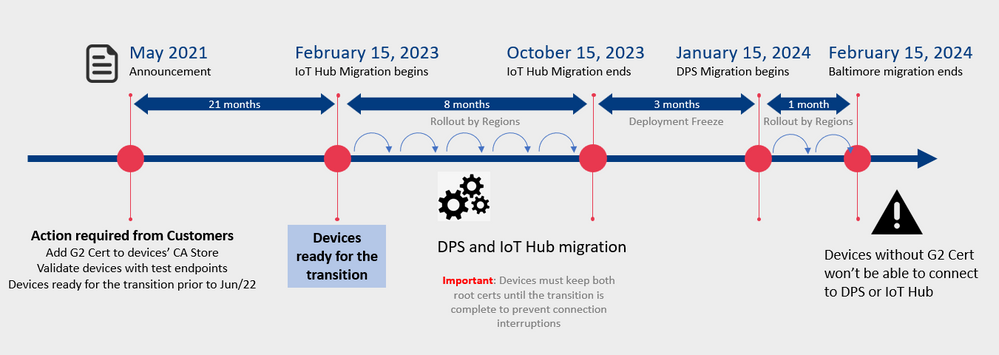
Telegram: j2inet
Twitter: @j2inet